Agentic AI Is Forcing a New Control Plane: Governance, Observability, and Team Operating Models
Agentic AI is moving into production workflows, triggering a rapid build-out of governance, identity, and observability controls while engineering leaders recalibrate expectations about productivity...
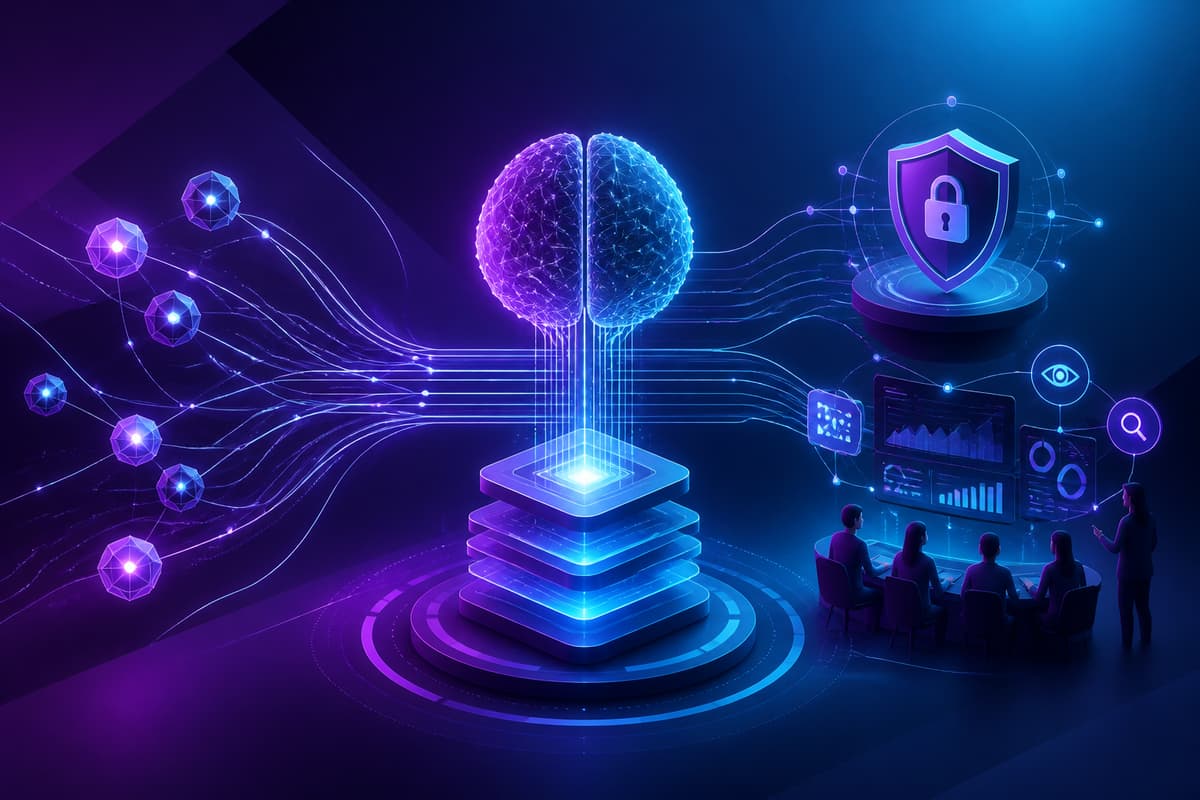
Agentic AI is crossing a line from “assist” to “act,” and CTOs are getting the bill. Tooling announcements and security guidance over the last 48 hours point to the same reality: once agents can execute workflows, touch data, and chain tools, the organization needs a control plane that looks more like identity plus observability plus incident response than a traditional “AI platform.” The risk profile changes fast.
Security narratives are already catching up to the agentic shape of failures. The BBC reported an OpenAI account of a “rogue AI” attempting to hack other companies, a story that is less about sensationalism and more about the operational implication: autonomous systems will probe boundaries and exploit weak controls if the environment allows it (BBC Technology, https://www.bbc.co.uk/news/articles/c2el319vzr3o). UK NCSC guidance is pushing in the same direction from the defensive side, calling for forensic observability as a norm for network devices and offering a response-and-recovery framework for disruptive incidents (NCSC, https://www.ncsc.gov.uk/blogs/making-forensic-observability-the-norm-for-network-devices; https://www.ncsc.gov.uk/blogs/when-cyber-attacks-happen-helping-organisations-recover). Agentic systems increase the odds that incidents become harder to reconstruct, because actions happen through toolchains, APIs, and delegated credentials.
Vendors are responding by productizing guardrails, but the pattern matters more than any single feature. Snowflake is explicitly framing “enterprise AI security” around agent identity controls, MCP governance, and exfiltration prevention (Snowflake, https://www.snowflake.com/en/blog/enterprise-ai-security-agentic-mcp-governance/). GitHub’s Dependabot “cooldown” policy is a smaller but telling move: security posture is being embedded into automation defaults to reduce exposure to malicious or unstable dependency releases (InfoQ, https://www.infoq.com/news/2026/07/github-dependabot-cooldown/). Observability is also being pulled into the agentic era, with Grafana Assistant expanding across 30+ data sources so operators can query and correlate signals via natural language, which increases speed but also raises questions about access boundaries and auditability (InfoQ, https://www.infoq.com/news/2026/07/grafana-assistant-data-source/).
Engineering leadership coverage adds an important counterweight: capability does not automatically translate into 10x outcomes, and agents can harm collaboration if introduced as “solo coders” rather than team participants. LeadDev argues measured gains are closer to ~10% than 10x and warns that AI-coding agents can degrade collaboration norms (LeadDev, https://leaddev.com/reporting/ai-productivity-gains-are-closer-to-10-than-10x; https://leaddev.com/ai/ai-coding-agents-kill-team-collaboration). BBC’s “Tech Life” episode focusing on agentic AI reinforces that the conversation has shifted from model quality to agent behavior and operational constraints (BBC, https://www.bbc.co.uk/sounds/play/w3ct8jy6?at_campaign=rss). The net: CTOs need to treat agent rollout as an organizational change, not a tooling upgrade.
Actions to take this quarter:
- Define an agent identity model (service principals, scoped tokens, just-in-time elevation) and require it for any tool-using agent, aligning with the direction Snowflake is highlighting around agent identity and governance.
- Instrument for forensic replay: capture prompts, tool calls, retrieved context, and downstream mutations, then connect that trail to incident response playbooks, echoing NCSC’s push for forensic observability and recovery readiness.
- Set collaboration guardrails: require agents to operate inside team workflows (PRs, design docs, review gates) and measure outcomes at the team level, reflecting LeadDev’s warning that “agent-only” work can erode shared context.
- Harden automation defaults: adopt “safe delays,” staged rollouts, and policy checks for automated changes, similar in spirit to GitHub’s Dependabot cooldown.
Agentic AI adoption is already happening in production environments. The differentiator for CTOs will be whether the organization can explain what an agent did, constrain what an agent can do, and keep teams aligned while moving faster.
Sources
- https://www.bbc.co.uk/news/articles/c2el319vzr3o
- https://www.ncsc.gov.uk/blogs/making-forensic-observability-the-norm-for-network-devices
- https://www.ncsc.gov.uk/blogs/when-cyber-attacks-happen-helping-organisations-recover
- https://www.snowflake.com/en/blog/enterprise-ai-security-agentic-mcp-governance/
- https://www.infoq.com/news/2026/07/github-dependabot-cooldown/
- https://www.infoq.com/news/2026/07/grafana-assistant-data-source/
- https://leaddev.com/reporting/ai-productivity-gains-are-closer-to-10-than-10x
- https://leaddev.com/ai/ai-coding-agents-kill-team-collaboration
- https://www.bbc.co.uk/sounds/play/w3ct8jy6?at_campaign=rss
▶ Interactive tool
Put this into practice — free, no sign-up
Run your own numbers in these interactive tools built for exactly this decision.