Context-First AI Platforms: Why Semantic Layers, Token Economics, and Watermarking Are Converging
AI programs are pivoting from prototype-first LLM integration to “context-first” architectures that standardize meaning, control token spend, and satisfy emerging compliance requirements like...
AI product work is entering a more constrained phase. The next competitive advantage is less about adding another model endpoint and more about building the operating system around AI: reliable context, predictable cost, and defensible governance. External pressure is rising too, with compliance requirements landing on the same teams trying to scale agents into real workflows.
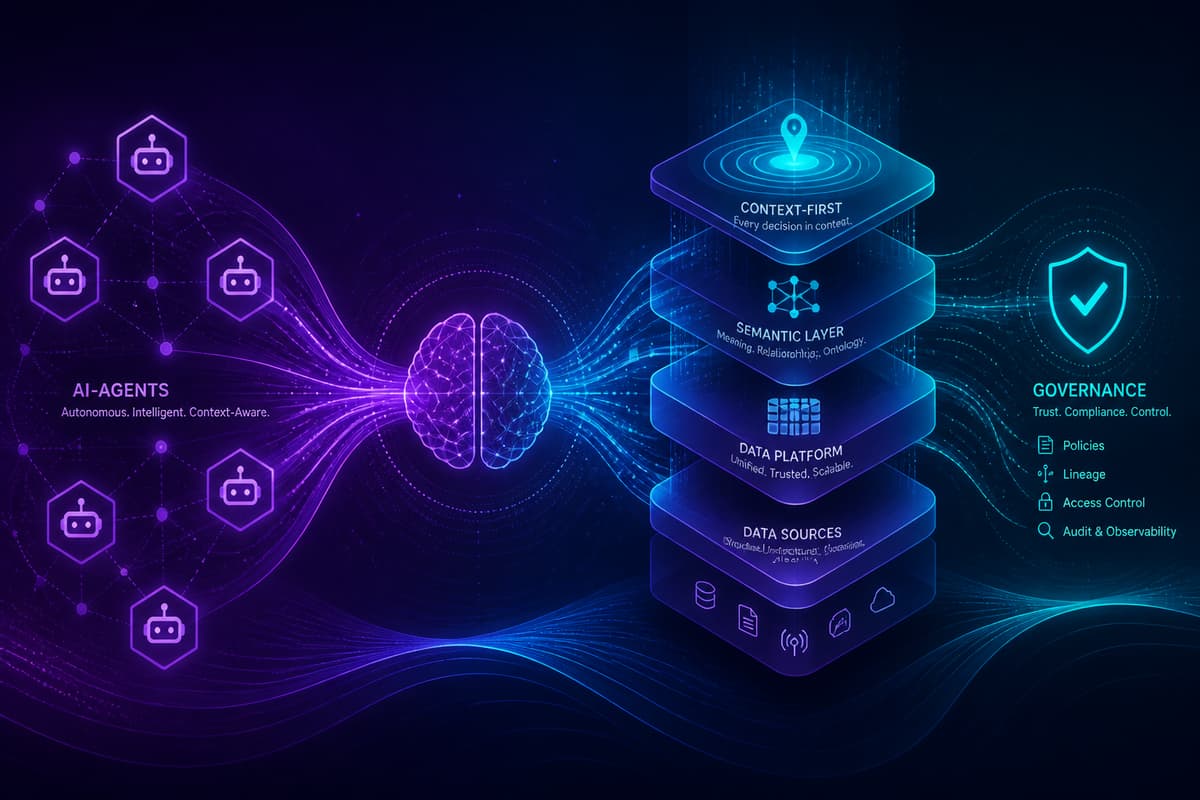
A clear architectural pattern is emerging: a dedicated context layer that standardizes meaning across tools and agents. Snowflake describes building an internal “context layer for AI agents” using semantic views so agents retrieve consistent definitions and higher-quality signals across the stack, rather than re-deriving business meaning in prompts or per-application logic (Snowflake, "Building a Context Layer for AI Agents"). dbt is pushing a similar separation-of-concerns argument in data platforms: the compute engine (for example, Databricks) and the transformation and meaning model are different decisions, and treating them as one creates long-term coupling and governance debt (dbt, "Databricks processes your data. dbt defines what it means").
Token economics is forcing the same conclusion. dbt’s “model for the token, not the table” shows a concrete mechanism for cost control: reshape and pre-model transcripts in the warehouse to avoid repeatedly paying for expensive context windows, reporting a 20x reduction in token costs (dbt, "Model for the token, not the table"). LeadDev’s reporting on “tokenmaxxing” adds the cultural side, highlighting why Meta, Amazon, and Microsoft backed away from token leaderboards: raw usage metrics encouraged the wrong behavior and did not translate into business value (LeadDev, "The tokenmaxxing hype didn’t last long"). Cost discipline is becoming an architectural requirement, not a FinOps afterthought.
Governance is tightening in parallel. InfoQ reports major frontier model providers adopting watermarking to comply with EU AI Act Article 50 requirements for machine-detectable marking of synthetic outputs (InfoQ, "Major Frontier Model Providers Adopt Watermarking Tech to Comply with EU Regulation"). That requirement lands directly on product and platform teams, because watermarking is not only a model-provider feature. Watermark detection, provenance handling, and user-facing disclosure often need to be integrated into downstream systems, logs, and content pipelines. Meanwhile, agent systems are becoming more persistent and tool-capable, as illustrated by SpaceXAI’s Grok Bot concept of agents operating on dedicated cloud computers and interacting with inboxes and apps (InfoQ, "SpaceXAI Launches Grok Bot for Autonomous AI Agents"). More autonomy increases the blast radius of weak context and weak controls.
CTOs should treat “context” as a platform surface area with owners, SLAs, and change management. A practical framing: (1) a semantic layer that defines entities, metrics, and permissions, (2) a retrieval and caching strategy that makes token spend predictable, and (3) a governance layer that handles provenance, watermarking expectations, and audit trails. LeadDev’s analysis of 15 million Gemini workplace conversations suggests adoption can stall when tools do not fit workflows or do not earn trust (LeadDev, "What 15 million Gemini conversations tell us about AI at work"). Trust is built by consistency and guardrails, not by more prompts.
Actionable next steps: inventory where business meaning lives today (dashboards, dbt models, app code, prompt templates), then choose a canonical meaning system and expose it to agents via a context API or semantic views. Add cost budgets at the feature level (not only per-team) and instrument token spend per workflow with caching and precomputed representations where possible. Finally, map upcoming compliance requirements like watermarking into your content and logging architecture now, because retrofitting provenance after agents ship is expensive and politically painful.
Sources
- https://www.snowflake.com/en/blog/snowflake-internal-context-layer-for-ai-agents/
- https://www.getdbt.com/blog/databricks-processes-your-data-dbt-defines-what-it-means
- https://www.getdbt.com/blog/model-for-the-token-not-the-table
- https://leaddev.com/reporting/the-tokenmaxxing-hype-didnt-last-long
- https://www.infoq.com/news/2026/08/eu-ai-content-watermark/
- https://www.infoq.com/news/2026/08/grok-bot-agent/
- https://leaddev.com/ai/what-15-million-gemini-conversations-tell-us-about-ai-at-work