From Tools to Control Planes: Why Artifacts, Config, and Local-First Are Becoming Governed Infrastructure
Engineering orgs are turning previously “back-office” concerns—artifact storage, configuration, and data locality—into governed control planes with policy, auditability, and resilience as first-class...
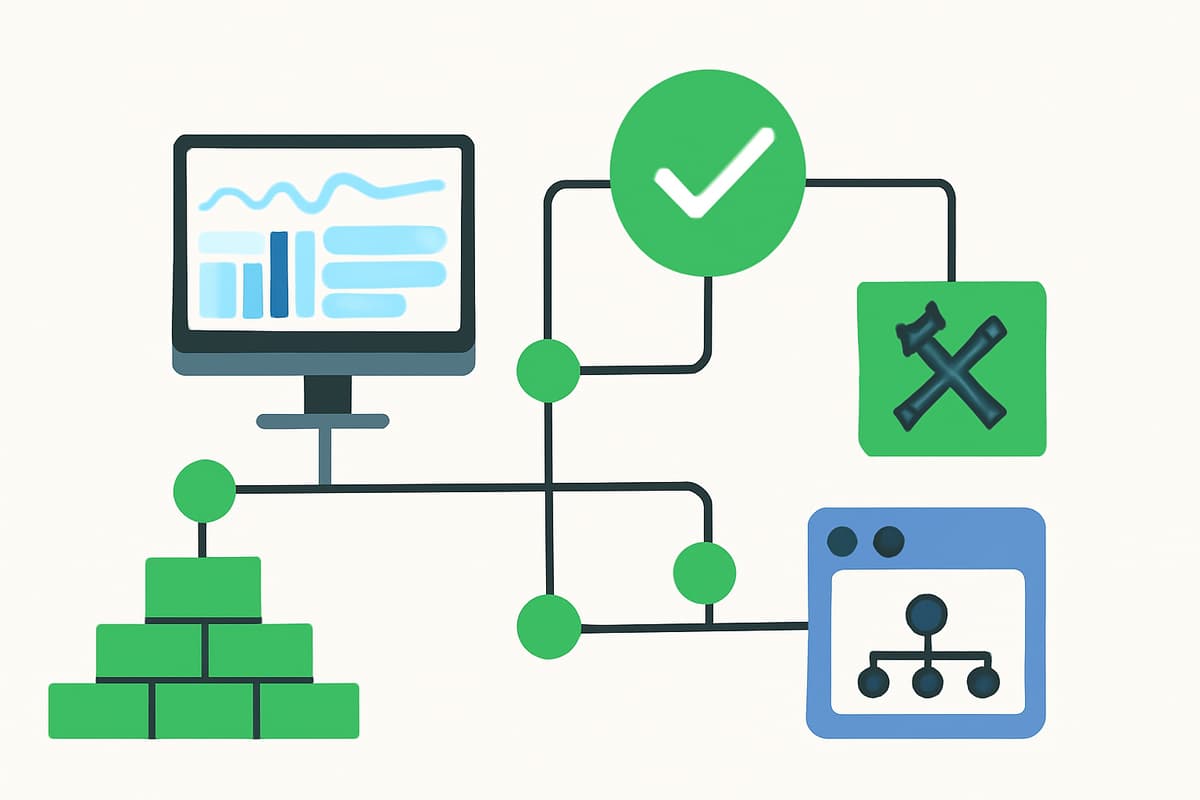
CTOs are watching a quiet architectural shift become a board-level issue: the stuff we used to treat as “engineering plumbing” (artifact storage, configuration, and even where state lives) is turning into governed control planes. The catalyst isn’t just scale—it’s the collision of supply-chain security expectations, outage intolerance, and sovereignty pressures that force clearer ownership, stronger policy, and better audit trails.
On the delivery side, Harness’s new Artifact Registry frames artifacts as something to secure and govern, not merely store—pulling artifact provenance, access controls, and lifecycle into a platform capability rather than a scattered set of repos and scripts (InfoQ: “Harness Reimagines Artifact Management…”). In parallel, InfoQ’s deep dive on “Configuration as a Control Plane” argues configuration has become a live system that shapes runtime behavior, where misconfiguration is a top-tier failure mode—meaning config needs the same rigor as code: policy, review, safe rollout patterns, and observability.
At the architecture level, Martin Kleppmann’s QCon talk pushes the conversation further: Europe’s dependency on US cloud providers is a strategic risk, and “local-first” (plus commoditizing infrastructure choices) is presented as a practical mitigation path (InfoQ: “Mitigating Europe’s Cloud Dependency…”). Whether or not you share the geopolitical premise, the technical implication is broad: teams are designing for portability and controllable state placement, which increases the importance of standardized, policy-driven control planes for artifacts, config, identity, and data sync.
The business consequence of getting this wrong is increasingly visible. When a consumer-facing financial platform suffers an IT failure that blocks transactions, it’s not experienced as a “bug”—it’s immediate reputational damage and customer harm (BBC: “IT failure leaves Hargreaves Lansdown clients unable to make transactions”). That kind of event is precisely where weak control planes show up: unclear blast-radius controls, risky config changes, brittle dependencies, and limited ability to prove what changed.
What should CTOs do now? First, treat artifacts and configuration as regulated surfaces inside your org: define owners, threat models, audit requirements, and SLOs. Second, invest in progressive delivery for configuration (staged rollouts, canaries, automated rollback) and in artifact governance (immutability, signing/attestation, retention, and least-privilege access). Third, if sovereignty/portability is becoming a constraint—because of customers, regulators, or geopolitics—start by decoupling state and identity: local-first or multi-cloud strategies succeed or fail on how well you can control data placement and runtime behavior, not on how fast you can redeploy stateless services.
The takeaway: “control plane thinking” is spreading from infra teams to the entire software lifecycle. The CTO opportunity is to get ahead of it—standardize the planes (artifacts, config, policy), make them observable and auditable, and you’ll buy both resilience and strategic flexibility when the next outage, audit, or geopolitical constraint arrives.
Sources
▶ Interactive tool
Put this into practice — free, no sign-up
Run your own numbers in these interactive tools built for exactly this decision.