Resilience-by-Design Is Expanding: From HA Architecture to Multi-Provider AI and Team Autonomy
Resilience is becoming a cross-cutting CTO mandate—spanning architecture (HA rebuilds, single sources of truth), operating model (team autonomy for infrastructure), and vendor strategy (avoid...
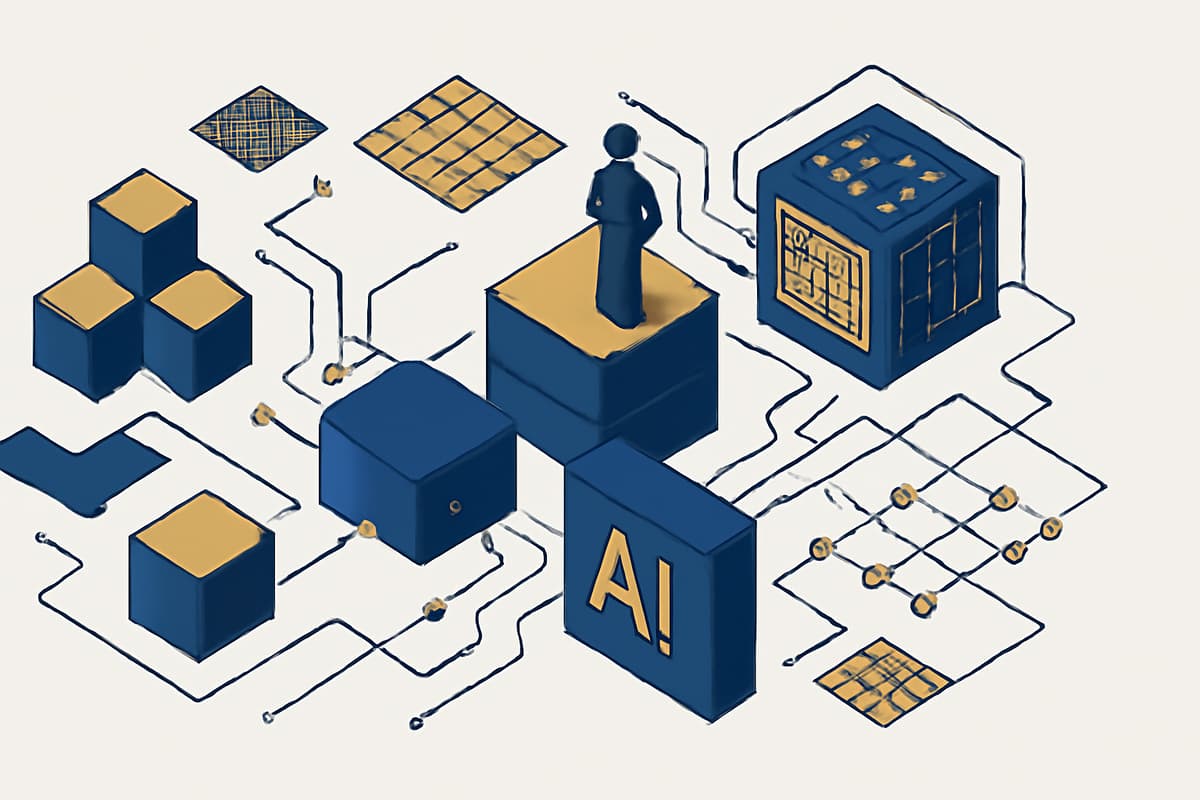
Resilience is quietly shifting from an SRE concern to a CTO-level design constraint—because the failure modes are no longer just outages. They’re vendor concentration risk, data inconsistency risk, and delivery-model bottlenecks that show up as missed revenue, compliance exposure, and an inability to ship.
On the architecture side, teams are explicitly reworking core systems for high availability and operational continuity. GitHub’s write-up on rebuilding search for GitHub Enterprise Server highlights the kind of “re-architect for failure” thinking that used to be reserved for tier-0 services, but is now expected for product-defining capabilities like search (GitHub Engineering). In parallel, ByteByteGo’s look at Agoda’s “single source of truth” for financial data shows resilience taking a data form: if your financial truth is fragmented, you’re not just inaccurate—you’re operationally fragile during incidents, audits, and business pivots (ByteByteGo).
The operating model is changing in the same direction: resilience through autonomy. InfoQ reports Adidas moving from centralized Infrastructure-as-Code control to a decentralized approach where teams shipped 81 infrastructure stacks in two months using layered guardrails. The key pattern is not “everyone does their own thing,” but “paved roads + local execution”: central teams define the safe primitives, while product teams move fast without waiting on a bottleneck (InfoQ).
What’s new is that resilience now includes supplier and capacity risks—especially for AI. TechCrunch points to a RAM shortage pushing MacBook Pro prices up, driven by demand for computers and data centers to power AI. That’s a reminder that AI roadmaps are constrained by physical supply chains, not just cloud invoices (TechCrunch). At the strategy level, the Defense Department CTO’s stance—"we can’t be reliant on any one AI provider anymore"—captures the emerging norm: multi-provider is becoming a governance requirement, not a nice-to-have (CNBC via Google CTO Leadership).
For CTOs, the synthesis is this: resilience is becoming an end-to-end property of your technology portfolio and org design. Architecturally, invest in HA for product-critical capabilities and treat data consistency (SSOT) as an availability problem. Organizationally, decentralize delivery with strong platform guardrails rather than centralized gatekeeping. Strategically, design for AI provider portability and plan for hardware scarcity (memory, GPUs) as a roadmap risk.
Actionable takeaways: (1) Identify 2–3 “business-critical primitives” (search, auth, payments/finance data) and set explicit HA + recovery objectives for them. (2) Shift platform teams toward publishing opinionated, composable templates and policies that enable autonomous provisioning. (3) Create an AI dependency register (models, embeddings, vector DBs, inference endpoints) and define portability targets—then test them. (4) Add supply-chain constraints (RAM/GPU availability, pricing volatility) into quarterly planning alongside cloud cost and reliability metrics.
Sources
- https://github.blog/engineering/architecture-optimization/how-we-rebuilt-the-search-architecture-for-high-availability-in-github-enterprise-server/
- https://www.infoq.com/news/2026/03/adidas-decentralized-platform/
- https://blog.bytebytego.com/p/how-agoda-built-a-single-source-of
- https://techcrunch.com/2026/03/03/apple-new-macbook-pro-laptop-price-more-expensive-than-previous-models-ram-memory-shortage/
- https://lh3.googleusercontent.com/-DR60l-K8vnyi99NZovm9HlXyZwQ85GMDxiwJWzoasZYCUrPuUM_P_4Rb7ei03j-0nRs0c4F=w16
▶ Interactive tool
Put this into practice — free, no sign-up
Run your own numbers in these interactive tools built for exactly this decision.