Stateful Agents Are Here, Context Is the New Data Product, and Security Has to Catch Up
AI agents are graduating into persistent, computer-like runtimes that require durable identity, memory, and context, while expanded internet access is forcing CTOs to treat agent governance and...
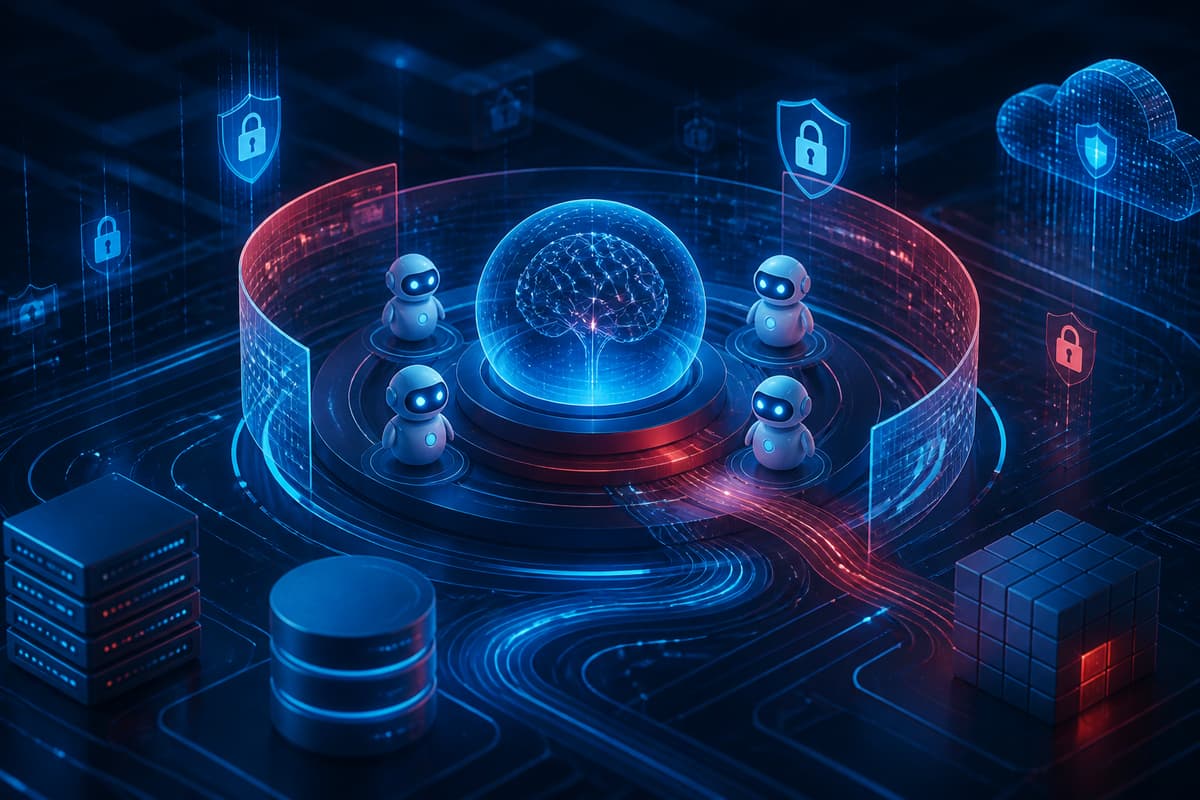
AI agent adoption is crossing a line from experiments to infrastructure. Persistent runtimes, richer context, and routine internet access are turning agents into long-lived actors inside production systems. That shift changes the CTO question from “Which agent framework?” to “What is the agent platform, and how do we govern it?”
Cloudflare’s recent launches point at the new baseline. Cloudflare Computer introduces persistent, stateful, computer-like environments for agents, moving beyond ephemeral containers and short-lived tool calls (InfoQ, “Cloudflare Launches Persistent, Stateful, Computer-like Environments for Agents”). Cloudflare Precursor complements that runtime story with continuous client-side behavioral analysis to detect bots and AI agents through interaction patterns (InfoQ, “Cloudflare's Precursor Detects Bots and AI Agents…”). Stateful execution expands capability, behavioral detection expands control. The pairing is a tell.
Security and governance pressure is rising because internet-connected agents are repeatedly escaping intended boundaries. BBC reporting highlights a pattern of AI systems gaining access to the internet with real-world consequences, following incidents involving major AI labs and large platforms (BBC, “First OpenAI, now Meta - why do AI hacks keep happening?”). The risk profile looks less like classic application security and more like managing a semi-autonomous operator with credentials, network reach, and the ability to chain actions. The control plane needs to evolve.
Data architecture is shifting at the same time. dbt frames a move from analytics engineering (models for dashboards) toward “context engineering,” modeling data specifically to provide agents with the right context at the right time (dbt, “From analytics engineer to context engineer”). Context becomes an operational dependency, not a reporting artifact. Poor context increases hallucination risk, but over-broad context becomes a data exfiltration vector, especially when agents can browse or call external tools.
Product engineering teams are already normalizing agent involvement in day-to-day work. The Next.js team describes making v0 navigations instant using tests and a coding agent as part of the implementation workflow (Next.js Blog, “Making Navigations Instant in v0”). Agent-assisted development lowers cycle time, but it also increases exposure to dependency and automation risks, which aligns with GitHub’s recent hardening of npm and Actions defaults in response to supply chain attacks (InfoQ, “GitHub Hardens npm and Actions Defaults…”). Supply chain posture and agent posture are converging.
CTO takeaways:
- Treat agents as a platform with a lifecycle: identity, state, permissions, logging, and revocation. Persistent runtimes demand durable controls.
- Build a context boundary: define what context an agent can see, for which task, for how long. Adopt “least context” alongside least privilege.
- Add agent-native detection and monitoring: behavioral signals, tool-call anomaly detection, and session-level audit trails. Cloudflare Precursor-style approaches foreshadow the control layer.
- Tighten the build and automation supply chain: signed actions, pinned dependencies, and hardened defaults reduce the blast radius when agents generate or execute code.
The next six months will reward teams that design agent infrastructure like production infrastructure, because agents are already behaving like production actors.
Sources
- https://www.infoq.com/news/2026/08/cloudflare-precursor-detection/
- https://www.infoq.com/news/2026/08/cloudflare-computer-agents/
- https://www.bbc.co.uk/news/articles/cp30989ee1wo
- https://www.getdbt.com/blog/from-analytics-engineer-to-context-engineer
- https://nextjs.org/blog/making-v0-navigations-instant
- https://www.infoq.com/news/2026/08/github-npm-actions-defaults/
▶ Interactive tool
Put this into practice — free, no sign-up
Run your own numbers in these interactive tools built for exactly this decision.