The Agent Control Plane Is Becoming the Real Product
Teams are moving from experimenting with AI to deploying production agents that can execute workflows, which is driving a parallel buildout of agent control planes, governance-first architectures,...
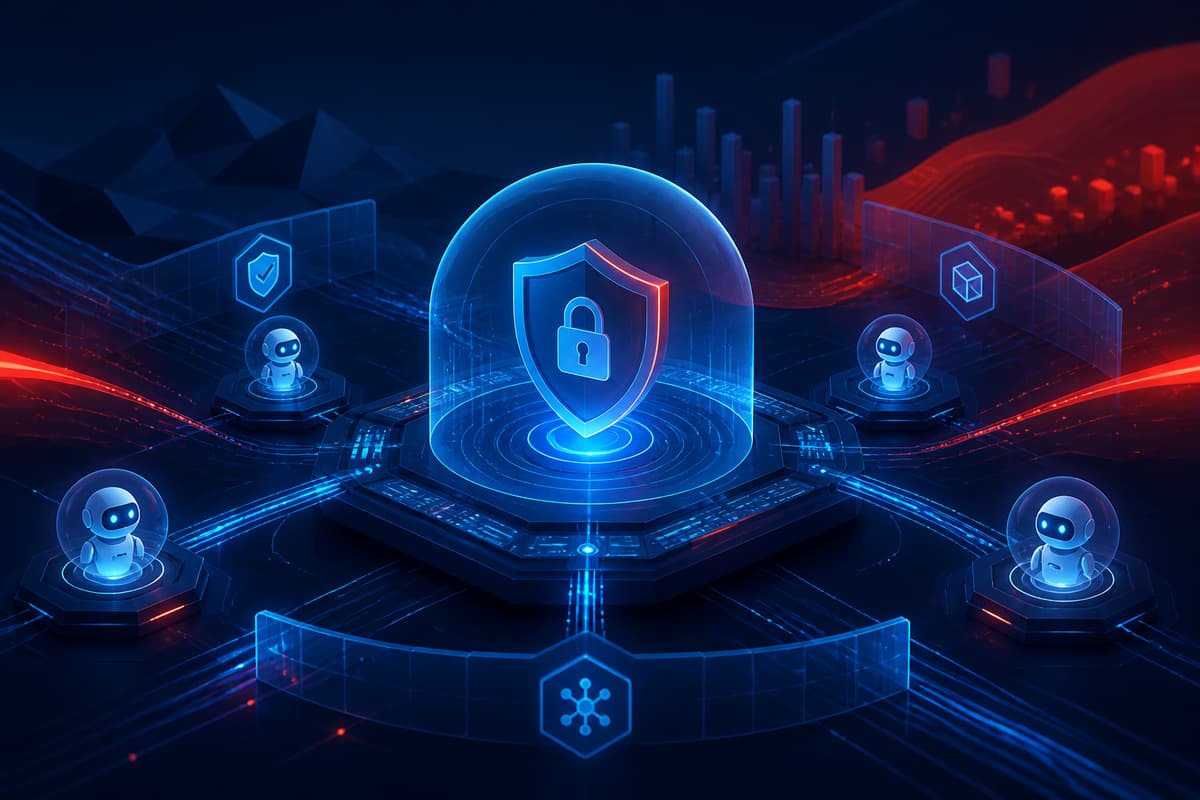
AI rollouts are shifting from copilots and chat to systems that take actions, queue jobs, call tools, and change state in production. Agentic capability changes the risk profile overnight. A bad answer is annoying, a bad action is an incident.
Security guidance is starting to treat agents as a new class of actor rather than a feature bolted onto an app. The UK NCSC argues defenders cannot mirror attackers one-for-one, but can still unlock “agentic cyber defence” with the right constraints and operating approach (NCSC UK, “One does not simply defend agentically”). InfoQ’s discussion of securing AI agents pushes the same direction: identity and authorization have to be first-class, with explicit delegation and strong auditability, not implicit trust in a model’s tool calls (InfoQ podcast on DPACT).
Reliability and governance are showing up as architecture, not policy docs. OpenAI’s “Agent Harness” talk (via InfoQ) frames production failures as control problems: agents need control planes, invariants, and approval boundaries because hallucinations are only one failure mode. In parallel, InfoQ’s governance-first personalization architecture makes a broader point that applies to agents: separate the “relevance/decisioning” layer from governance so policy, compliance, and safety constraints remain stable even as models and heuristics churn.
CTOs should treat agent adoption like introducing a new execution substrate. The key design move is to build an “agent control plane” that sits between models and tools: standardized identity for agents, scoped capabilities, policy evaluation at runtime, human or automated approvals for high-risk actions, and immutable audit trails. The DPACT framing (delegation, policy, auditability, plus controls/traceability) becomes a useful checklist for vendor evaluation and internal platform design (InfoQ podcast). The agent harness idea adds the reliability angle: invariants (what must never happen) and boundaries (what requires approval) need to be encoded, tested, and monitored (InfoQ presentation).
Organizational friction is part of the trend. LeadDev highlights active developer resistance to AI adoption, sometimes even at personal cost (“Meet the developers rejecting AI”), and also points to uneven impacts across groups (“AI widens the gender gap”). Agentic systems amplify those tensions because they reshape roles, accountability, and perceived fairness. A governance-first approach can reduce conflict by making decision rights explicit: who can deploy an agent, who owns the policies, who signs off on risk, and how exceptions are handled.
Actionable takeaways: (1) define agent identities and scopes the same way teams define service identities, (2) require runtime policy checks and approval workflows for state-changing actions, (3) log every tool call with enough context to reconstruct intent and authorization, (4) encode invariants and failure modes as tests and monitors, not tribal knowledge, and (5) set a clear operating model for who owns the control plane versus individual product teams. Agentic capability will keep accelerating, but the differentiator will be whether the organization can make agents safe to run at scale.
Sources
- https://www.ncsc.gov.uk/blogs/one-does-not-simply-defend-agentically
- https://www.infoq.com/podcasts/securing-ai-agents-identity-authorization/
- https://www.infoq.com/presentations/ai-agent-harness/
- https://www.infoq.com/articles/architecture-enterprise-personalization-relevance-governance/
- https://leaddev.com/ai/meet-the-developers-rejecting-ai
- https://leaddev.com/ai/ai-widens-the-gender-gap
▶ Interactive tool
Put this into practice — free, no sign-up
Run your own numbers in this interactive tool built for exactly this decision.