The Agent Runtime Layer Is Emerging: Secure Execution, Governance, and Model Portability
Organizations are standardizing AI agents as a default interface for engineering and data work, then rapidly building the missing production substrate: secure agent execution, governed tool access,...
AI agents have crossed a threshold from novelty to default workflow in many teams, and the architectural consequences are arriving fast. CTOs are getting pulled into decisions that look less like “pick a model” and more like “build an execution substrate for non-deterministic software.” The next year of AI delivery will be won by teams that treat agents as a platform problem, not a feature.
Engineering org signals point to normalization. LeadDev argues that AI coding agents have become the default and asks what comes next, while also reporting a counter-move: engineering managers shifting from cloud AI to local LLMs for cost, privacy, and control reasons. The combination suggests a split-brain reality for CTOs: productivity expectations keep rising, but centralized cloud-only model strategies are getting challenged by budget, data residency, and latency requirements. Agent adoption is not slowing down. Deployment patterns are fragmenting.
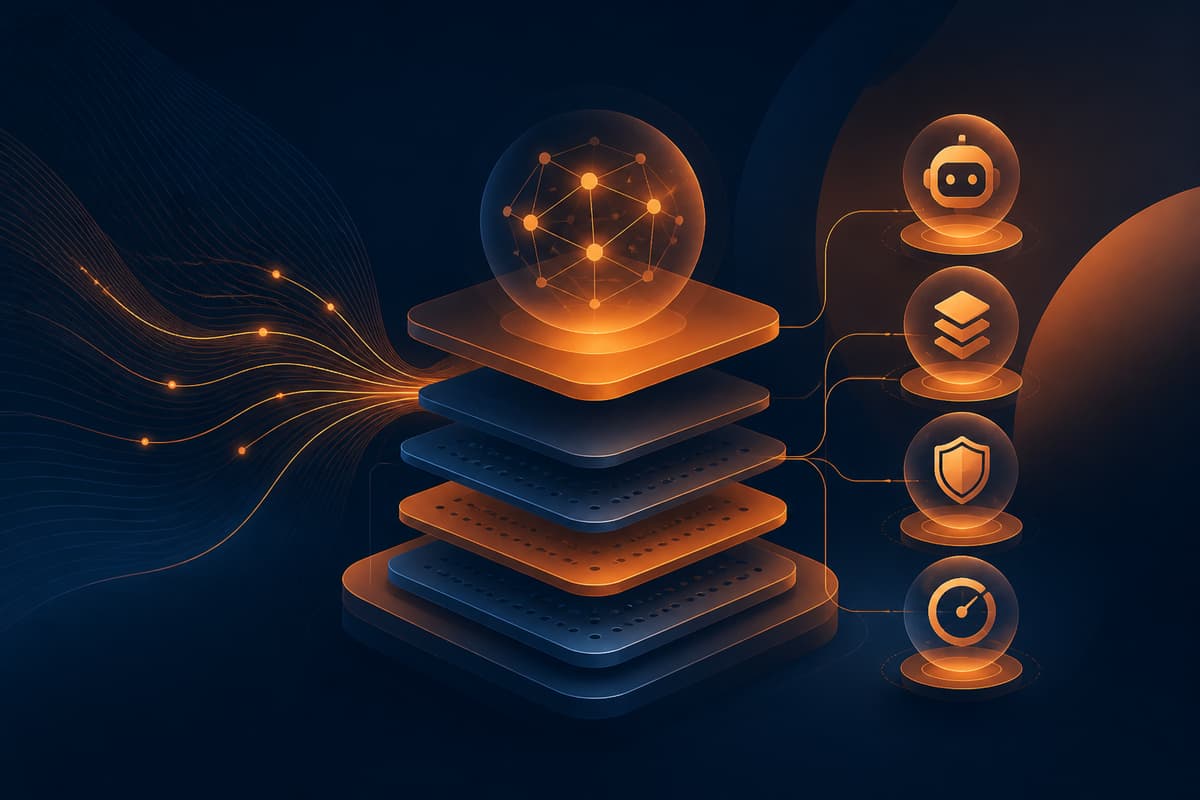
Platform and architecture teams are responding by building what can be called an agent runtime layer. Grab’s security team built Palana, a Kubernetes-native secure execution platform specifically to run autonomous agents safely, citing unpredictable tool use and the need for controlled execution (InfoQ). Slack described a four-phase evolution from a self-managed SageMaker setup to a multi-cloud AI serving platform spanning AWS Bedrock and other components (InfoQ). The shared theme is not “Kubernetes” or “multi-cloud” in isolation, it is the need to make model choice and tool access swappable while keeping governance consistent.
Data platforms are converging on the same idea from the workflow side. Databricks describes “agentic data engineering” where agents help generate consistent pipelines (Daikin Applied Americas) and positions the lakehouse as the system that turns high-volume tracking data into advantage (sports intelligence). Snowflake and NVIDIA pitch agentic AI in life sciences as governed workflows with secure data access and faster R&D. Taken together, vendor messaging and case studies indicate a new center of gravity: agents are becoming first-class operators over data and code, so the platform must provide guardrails (permissions, lineage, policy), not just storage and compute.
CTO takeaways:
- Design for model portability early. Multi-cloud serving journeys (Slack) and the local-LLM swing (LeadDev) both imply that a single-provider assumption will age poorly. Standardize interfaces (tool schemas, prompt/response contracts, evaluation harnesses) so model swaps are operational, not existential.
- Treat agents as untrusted workloads by default. Secure execution platforms (Grab/Palana) are an early blueprint: isolate agent runs, constrain egress, gate tool access, and log every action. The security model should resemble sandboxing plus zero-trust service-to-service auth, not “library usage.”
- Add an “agent ops” discipline. Non-determinism changes incident response and QA. Invest in evals, replayable traces, and cost/latency budgets per workflow. MIT research on improving speed and energy efficiency of multi-step agent workflows (Murakkab) reinforces that workflow optimization will matter as much as model quality.
The agent runtime layer is becoming a distinct platform surface area: execution, policy, observability, and model routing. The CTO question worth asking this quarter is simple: does the organization have a coherent runtime and governance story for agents, or a growing pile of powerful, opaque automations running wherever they can fit?
Sources
- https://leaddev.com/ai/ai-coding-agents-are-now-the-default-what-comes-next
- https://leaddev.com/ai/engineering-managers-ditch-cloud-ai-for-local-llms
- https://www.infoq.com/news/2026/06/grab-ai-platform/
- https://www.infoq.com/news/2026/06/slack-multicloud/
- https://www.databricks.com/blog/how-daikin-applied-americas-builds-consistent-data-pipelines-scale-genie-code
- https://www.snowflake.com/en/blog/snowflake-nvidia-bionemo-agentic-ai-life-sciences/
- https://news.mit.edu/2026/improving-ai-agent-speed-and-energy-efficiency-0625
▶ Interactive tool
Put this into practice — free, no sign-up
Run your own numbers in these interactive tools built for exactly this decision.