AI Agents Are Entering Prod—Now Governance Becomes Architecture
AI agents are being embedded directly into core infrastructure and workflows (cloud migration, enterprise ops, product experiences), forcing a parallel rise in AI-specific controls: least-privilege...
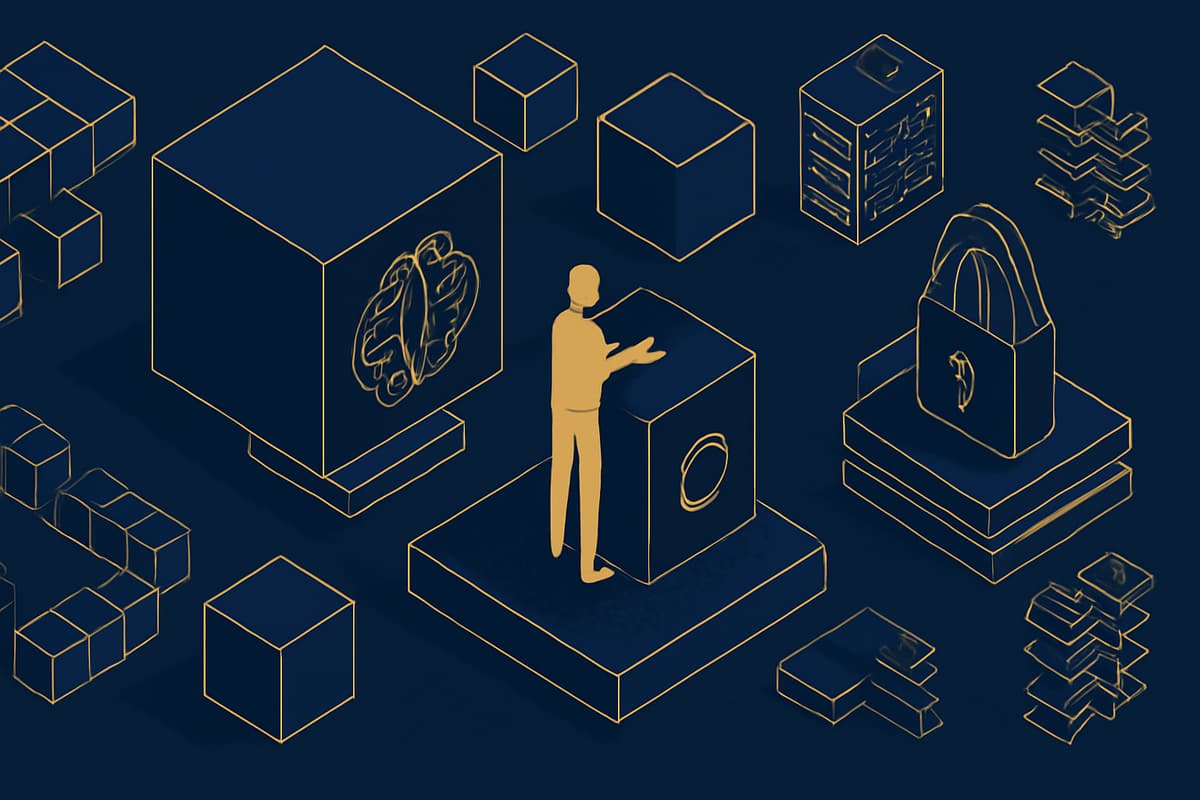
AI is rapidly shifting from “chat in a side panel” to “actor in your production environment.” In the last 48 hours, we’ve seen AI positioned to plan cloud migrations, shape user-facing content feeds, and increasingly touch operational workflows. For CTOs, this is the inflection point where AI governance stops being a policy deck and becomes an architectural requirement.
On the infrastructure side, Microsoft’s Azure Copilot Migration Agent is a strong signal that “agentic” capabilities are moving into the control plane—automating discovery, migration planning, and landing zone creation directly inside the portal (InfoQ). That’s useful, but it also changes the risk profile: when an AI can propose (or eventually execute) changes to networks, IAM, and resource topology, your blast radius is no longer limited to a single engineer’s laptop—it’s tied to whatever permissions the agent holds.
That risk is no longer hypothetical. Teleport’s new report links over-privileged AI systems to a 4.5x increase in security incidents (InfoQ). The key takeaway isn’t “AI is insecure,” it’s that enterprises are repeating an old failure mode—granting broad, durable permissions—while the behavior of the system (non-deterministic, tool-using, prompt-influenced) is fundamentally different from typical service accounts. In practice, least privilege for AI needs to be more dynamic: time-bounded credentials, scoped tool access, audited action traces, and strong separation between “plan” and “apply.”
We also see the same pattern on the product side. Bluesky’s Attie uses AI to help users build custom feeds (TechCrunch). Meanwhile, research cited by The Hill suggests certain chatbot behaviors (e.g., self-affirmations) can harm human relationships (The Hill). Put together, this highlights a CTO-level reality: once AI is shaping what users see and reinforcing how they feel, “quality” includes psychological and social externalities—not just relevance and retention. Guardrails become part of product architecture: evaluation suites for harmful patterns, red-teaming for manipulation dynamics, and clear UX disclosure when AI is steering outcomes.
A second-order trend is how teams are trying to operationalize this safely. ProxySQL’s multi-tier release strategy (Stable vs Innovative vs AI tracks) is a useful analog for AI rollout: separate reliability-critical paths from fast-moving experimentation, and make “AI-enabled” features explicitly opt-in with different SLOs and rollback expectations (InfoQ). This is the release-management counterpart to least-privilege: constrain the system both in what it can do (permissions) and where it can do it (release channels).
Actionable takeaways for CTOs: (1) Treat AI agents as privileged software supply chain components—design explicit permission boundaries, short-lived credentials, and full auditability before expanding scope. (2) Split “plan” from “execute”: require human approval or policy-as-code gates for any infrastructure-changing action. (3) Adopt tiered release patterns for AI features (or AI modes) with distinct SLOs, telemetry, and rollback playbooks. (4) Expand your definition of AI quality to include user-impact harms, not only accuracy—build continuous evaluation and red-team loops into the delivery lifecycle.
Sources
- https://www.infoq.com/news/2026/03/azure-copilot-migration-agent/
- https://www.infoq.com/news/2026/03/teleport-ai-report/
- https://www.infoq.com/news/2026/03/proxysql-multi-tier-release/
- https://techcrunch.com/2026/03/28/bluesky-leans-into-ai-with-attie-an-app-for-building-custom-feeds/
- https://thehill.com/policy/technology/5805324-self-affirmations-ai-chatbot-relationship-study/
▶ Interactive tool
Put this into practice — free, no sign-up
Run your own numbers in this interactive tool built for exactly this decision.