Security Is Getting Granular: From Platform Assurances to Component-Level Attestation
Security is moving from coarse, platform-level assurances to component-level verification and continuous attestation, pushed by multi-tenant isolation failures, agentic AI in DevSecOps, and early...
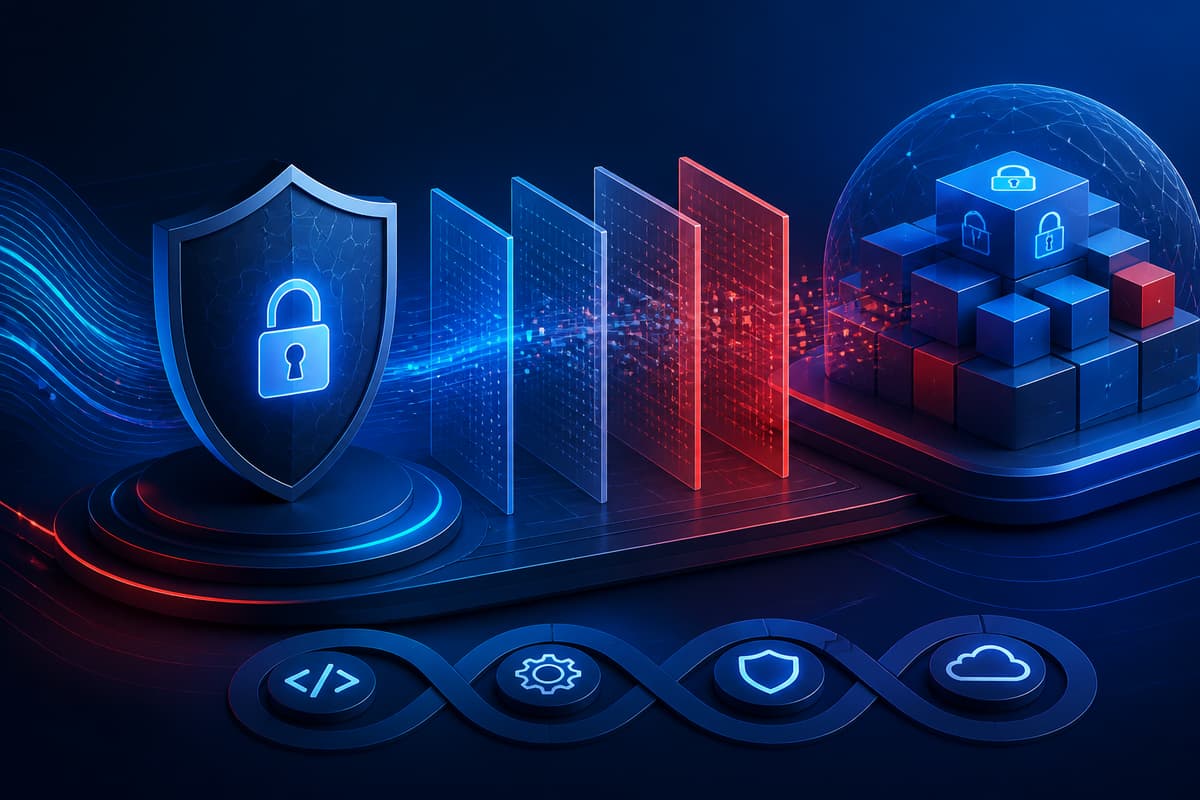
Security teams have spent a decade standardizing around platform posture: hardened images, cluster policies, device patch levels, and a handful of “blessed” environments. That model is cracking under two pressures happening at the same time, multi-tenant infrastructure risk is showing up in real incidents, and automation is accelerating what gets shipped (and what can go wrong).
Cloudflare’s disclosure of cross-tenant data exposure in Containers and Sandboxes is a clean example of the new reality: isolation is not a binary property you can assume once and forget. The reported issue came down to thin-provisioned storage pools reusing blocks without zeroing, which let researchers recover data across tenants (InfoQ: Cloudflare cross-tenant exposure). The technical root cause matters less than the lesson for CTOs: multi-tenancy creates “below the Kubernetes line” failure modes that bypass many application-layer controls. Vendor attestations and compliance checklists do not catch every class of isolation bug.
Google’s move in Android toward Security State libraries that verify patch status at an individual component level points to the counter-move: stop treating security posture as a single global attribute, and start verifying the exact dependency or subsystem that matters for a given risk (InfoQ: Android Security State libraries). Component-level verification is a pattern CTOs should expect to see more broadly in cloud-native systems, SBOM-driven supply chain controls, and internal platform engineering. A single “patched” label is becoming as misleading as a single “secure” label.
Standards and policy signals reinforce the same direction. NIST’s upcoming webinar on DevSecOps and the impact of agentic AI frames autonomous agents as a first-class variable in secure delivery, not a novelty feature (NIST: DevSecOps and the Impact of Agentic AI). Separately, the US administration’s “Super Intelligence Force” announcement underscores that AI risk governance is moving from abstract debate to formal oversight structures (BBC: Super Intelligence Force). Agentic tooling will increase deployment velocity, expand access to sensitive systems, and create new audit requirements. Verification will have to become continuous and machine-checkable.
Post-quantum readiness fits the pattern as well. Cloudflare’s plan to run a public CA issuing quantum-safe TLS certificates indicates that “future cryptography” is getting pulled into near-term roadmaps (InfoQ: quantum-safe TLS certificates). Post-quantum TLS is not only a cryptography project, it is an inventory and verification project: knowing where certificates live, which clients can negotiate which ciphers, and how to rotate without outages. Granular visibility becomes the prerequisite.
Actionable takeaways for CTOs
- Treat multi-tenant isolation as an explicit architectural risk. Ask vendors where isolation boundaries really sit (storage, memory, kernel, hypervisor) and what telemetry exists for boundary regressions.
- Push posture down a level. Prefer controls that can answer “is this component patched and configured correctly” over “is the system patched.” Component-scoped attestations age better.
- Plan for agentic CI/CD with guardrails. Require provenance, scoped credentials, and policy-as-code approvals that agents cannot bypass. Log everything; assume investigation will be required.
- Start post-quantum TLS as an inventory program. Certificate and client capability mapping usually blocks migration more than algorithms do.
Sources
- https://www.infoq.com/news/2026/10/cloudflare-cross-tenant-exposure/
- https://www.infoq.com/news/2026/10/android-security-state-libs/
- https://www.nist.gov/news-events/events/2026/10/devsecops-and-impact-agentic-ai
- https://www.bbc.co.uk/news/articles/cqj6jenp26zyo
- https://www.infoq.com/news/2026/10/postquatam-certificates/
▶ Interactive tool
Put this into practice — free, no sign-up
Run your own numbers in these interactive tools built for exactly this decision.