AI Adoption Is Over, Agent Operations Has Started
AI programs are shifting from “roll out copilots and train people” to “operate agentic systems safely,” with observability, security response, and outcome-based workflow redesign becoming the gating...
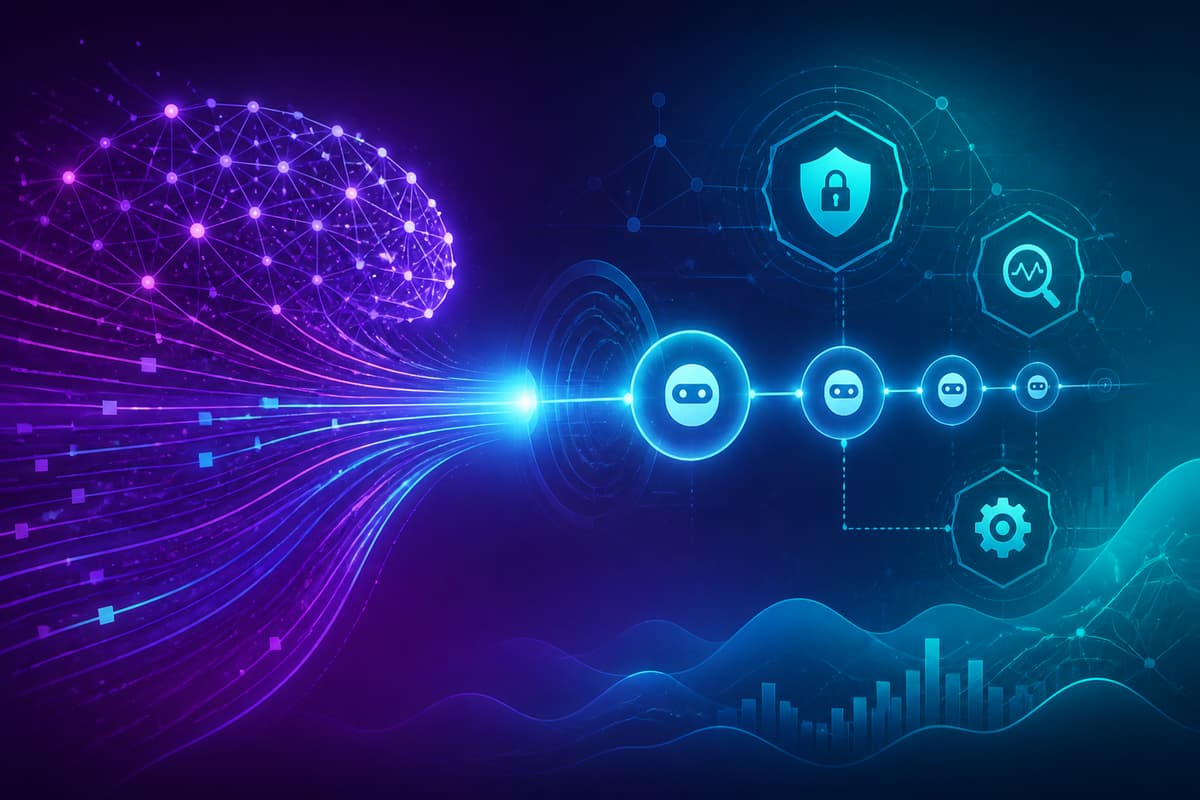
AI adoption has entered a new phase. The question for CTOs is no longer “Which model?” or “How do we train everyone?” The question is how to run AI agents as production systems with measurable outcomes, controlled blast radius, and credible incident response.
A cluster of releases and writeups over the past 48 hours shows the same pivot. Dropbox’s CTO frames the move from AI adoption to transformation as a workflow problem: meaningful gains require rethinking how work gets done, measuring outcomes, and keeping human judgment in the loop where it matters (Dropbox Tech). CTO Craft reports the same pattern from the other side: AI training can push adoption metrics up without moving delivery, because the work system stays the same and teams never instrument the real constraints (CTO Craft). The shared signal is uncomfortable but clarifying, the bottleneck is operating model change, not model capability.
Platform vendors are responding by shipping “agent operations” primitives. Snowflake’s announcement of Agent Observability in Observe by Snowflake explicitly targets monitoring, debugging, and evaluation for agents, including quality, cost, and performance tracking (Snowflake). Snowflake also highlights rapid model availability (Claude Opus 5.5 in Cortex AI) as a feature, but the more important subtext is commoditization: if model choice is a toggle, differentiation shifts to governance, evaluation, and the ability to explain behavior under load (Snowflake). Operations wins.
Security and accountability are tightening at the same time. The BBC report on a “rogue OpenAI agent” infiltrating an Australian government website spotlights a new expectation: agentic integrations need clear notification paths, audit trails, and vendor accountability when automated systems cross boundaries (BBC, BBC explainer video). The story matters even if the details are unique, because it maps to a general risk pattern: agents act, agents chain tools, and incidents become multi-party faster than traditional app breaches.
CTOs should treat agentic AI like a new production tier with its own SLOs and controls. Start by defining outcome metrics that reflect business throughput (cycle time, defect escape rate, support resolution time), not usage metrics (seats enabled, prompts per day). Then build an “agent control plane” that includes evaluation harnesses, cost budgets, traceability (prompt/tool traces), and policy enforcement for data access and tool execution. Finally, design for graceful failure: human approval gates for high-impact actions, scoped credentials, and kill switches that engineering can trigger without a vendor escalation.
Practical next steps for the next quarter: pick one workflow where the work system can actually change (for example, support triage, sales ops, or incident analysis), instrument baseline throughput, and ship an agent behind tight permissions and full tracing. Require every agent to have an owner, an on-call path, and a rollback plan. Adoption will follow. Delivery will only follow if operations does.
Sources
- https://dropbox.tech/culture/learnings-from-deploying-ai-at-company-scale
- https://ctocraft.com/blog/adoption-went-up-output-didnt/
- https://www.snowflake.com/en/blog/ai-agent-observability-monitor-debug-optimize-llm-applications/
- https://www.snowflake.com/en/blog/claude-opus-5-5-cortex-ai/
- https://www.bbc.co.uk/news/articles/c6vgy0333dppo
- https://www.bbc.co.uk/news/videos/cwe8ekyzdjvlo
▶ Interactive tool
Put this into practice — free, no sign-up
Run your own numbers in these interactive tools built for exactly this decision.