Mid Week Summary: Governed Platforms, Audit-Ready Reliability, and Energy-Driven Infrastructure Risk
The week’s pattern: “trust” moved from a policy slide to a production requirement
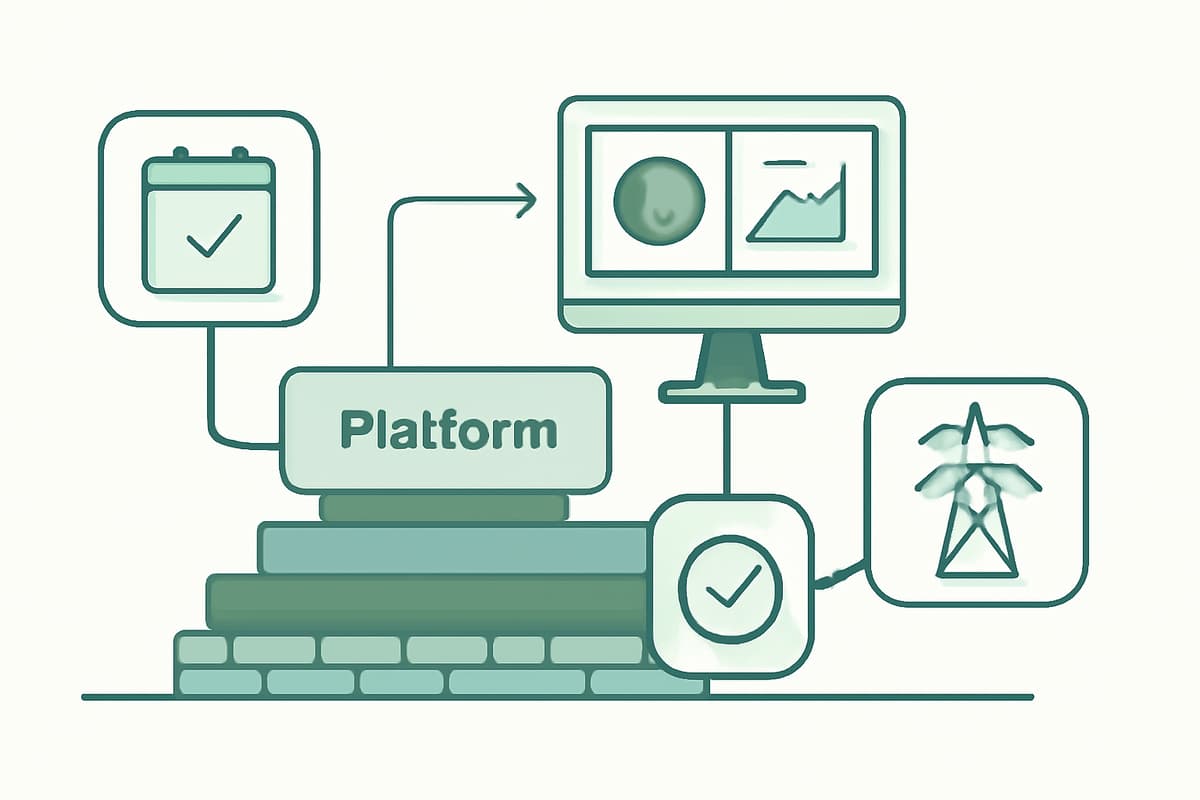
Table of Contents
The week’s pattern: “trust” moved from a policy slide to a production requirement
This week felt like a quiet shift in what CTOs are actually being held accountable for. It’s not just whether your team can ship AI features—it’s whether you can prove how systems behave under stress, how decisions get made (by humans and agents), and how your infrastructure holds up when energy and geopolitics wobble. The through-line across our own posts and the wider news: governance and resilience are becoming day-to-day engineering constraints, not quarterly review topics.
What we published: governance is becoming the platform
We published a cluster of pieces that all point to the same operating reality: AI is turning into shared infrastructure, and that drags governance into the core of platform engineering. Start with “AI Is Becoming Platform Infrastructure—and a Governance Problem CTOs Can’t Delegate”, then layer in “AI Accountability Meets AI Economics: Why CTOs Need a ‘Governed AI Platform’ Now” and “AI Enters the Ops & Accountability Phase”. Together they make a practical point: the bottleneck isn’t model access anymore—it’s enforcement (policy, spend caps, audit trails, incident playbooks) and making that enforcement repeatable across teams.
On the engineering mechanics side, two posts sharpened what “governed” actually means in production. “From LLM Features to Agentic Platforms: Why Contracts + Observability Are Becoming the CTO Bottleneck” argues that once agents can call tools across services, you need real integration contracts and telemetry that can stand up in front of security and risk. “Auditable Reliability: When Regulation Meets eBPF and AI-Powered SRE” takes it further: reliability is moving toward preventive controls (eBPF, automated rollback discipline, FMEA-style thinking) because regulators and boards increasingly want evidence, not assurances. If you only read one “platform” piece this week, make it “Passkeys + Agent-Ready Observability: The New Platform Primitives CTOs Need to Standardize”—it’s a clean way to frame what should become default across your org.
Meanwhile, our daily briefings kept connecting product decisions to macro constraints: Daily Sync (Apr 25) and Daily Sync (Apr 29) both underline the same pressure: AI scale is colliding with energy reality, and that changes cloud-region strategy, DR assumptions, and vendor concentration risk. If you want the sector-by-sector view of how this hits roadmaps, the week’s Industry Outlooks (SaaS, ecommerce, media/gaming, hardware, telecoms, healthcare, insurance, banking) are a useful scan—start with “Industry Outlook: SaaS — Week of April 27, 2026” and “Industry Outlook: Hardware & Semiconductors — Week of April 27, 2026” to see how economics and supply constraints are feeding back into platform strategy.
What happened outside our walls: energy shocks and “proof” culture
The most CTO-relevant external signal this week wasn’t a new framework—it was energy and credibility. The BBC reported that the United Arab Emirates plans to quit Opec (BBC News, Apr 29, 2026: https://www.bbc.com/news/articles/cj4pxwlr52yo), a move widely read as destabilizing for oil coordination. Pair that with the very tangible “household” side of energy stress—heating oil vouchers being offered to struggling families (BBC News, Apr 29, 2026: https://www.bbc.com/news/articles/ce8p07377jlo)—and you get a reminder that energy volatility isn’t abstract. For CTOs, this shows up as data center cost swings, regional capacity planning risk, and renewed attention to efficiency and workload placement.
A second thread was about claims, evidence, and enforcement. The BBC covered an advert for a £49 serum being banned over a ‘five years younger’ claim (BBC News, Apr 29, 2026: https://www.bbc.com/news/articles/c78kl05en7po). It’s not “tech news,” but it’s the same cultural direction we’re seeing in software: regulators and watchdogs are less tolerant of vibes-based marketing and more willing to demand substantiation. That maps directly to how AI features will be judged—especially anything that touches consumers, finance, health, or identity.
Takeaways: build for audits, not demos—and treat energy as a platform dependency
Put the internal and external signals together and the playbook gets clearer. First, assume you’ll need to show your work: governed AI platforms, agent contracts, and audit-ready reliability aren’t overengineering—they’re how you keep shipping when scrutiny rises. Second, treat energy and geopolitics like upstream dependencies of your architecture, not background noise; the UAE/Opec story is a reminder that “cloud strategy” and “energy strategy” are now coupled. If you want to go deeper, start with the platform governance spine in “AI Accountability Meets AI Economics…”, then use “Auditable Reliability…” as the checklist for what you’ll eventually need to prove under pressure.
▶ Interactive tool
Put this into practice — free, no sign-up
Run your own numbers in these interactive tools built for exactly this decision.