AI Is Now a Platform Problem: Kubernetes, Tenancy, and Semantic Governance Are Converging
AI is becoming an operational platform problem: enterprises are standardizing on Kubernetes and cloud “AI infrastructure” while simultaneously tightening governance (permissions, tenancy, semantics)...
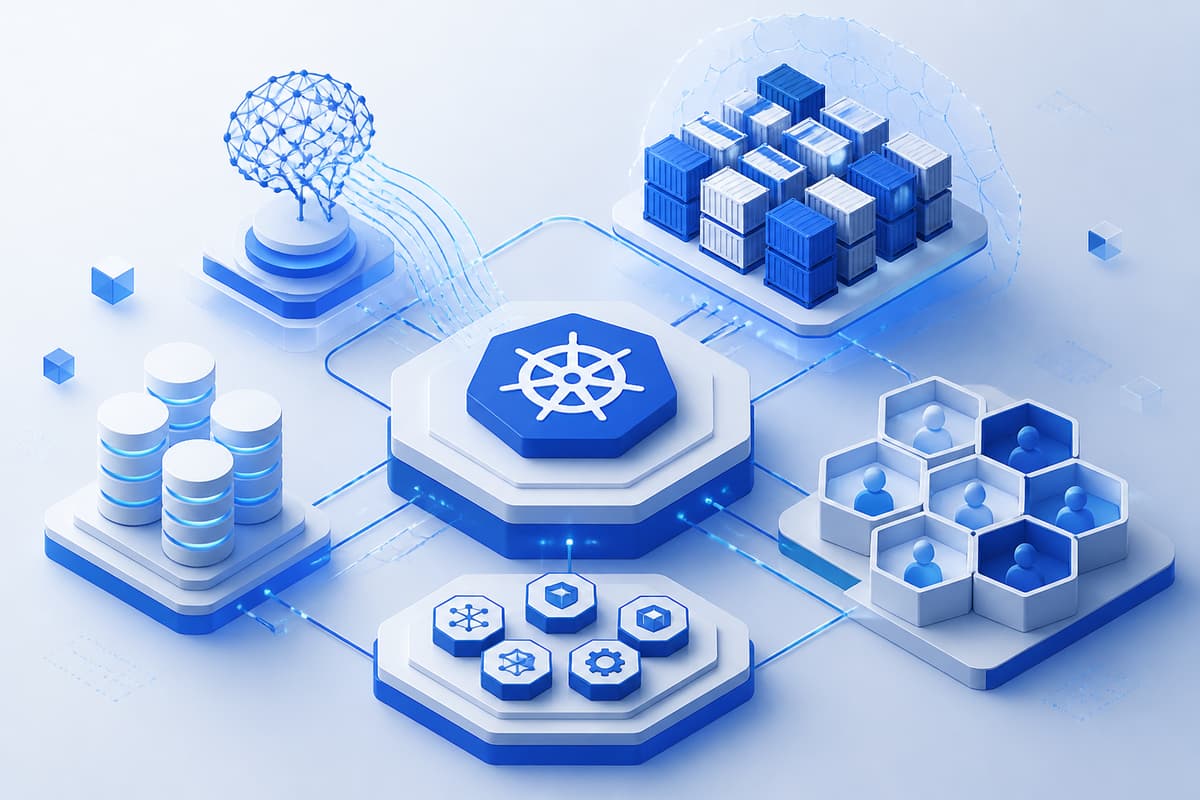
The last wave of AI adoption was dominated by model choice and prompt craft. The next wave—already visible in this week’s engineering and cloud announcements—is dominated by platform questions: how you run AI workloads reliably, how you govern access in multi-tenant environments, and how you keep “truth” consistent across metrics and agents. For CTOs, this matters now because AI is crossing the boundary from “tools teams try” to “systems the business depends on,” which demands the same rigor as payments, identity, and data platforms.
On the infrastructure side, vendors and large operators are standardizing AI workloads around Kubernetes primitives and fleet-level operations. Microsoft’s latest AKS expansion positions Kubernetes as a first-class substrate for AI training/inference, with bare metal options and fleet management explicitly framed around AI infrastructure needs (InfoQ: “Microsoft Expands Azure Kubernetes Service with Bare Metal, Fleet Management and AI Infrastructure”). Netflix describes a similar direction internally: simplifying batch compute using Kueue as part of making compute “more Kubernetes-native” (Netflix Tech Blog: “How Netflix Simplified Batch Compute with Kueue”). The subtext is important: AI isn’t just a new workload—it’s pressuring orgs to mature scheduling, quota, multi-cluster operations, and cost controls.
At the same time, the governance story is getting sharper—especially for agentic and RAG systems that blend proprietary data, tool execution, and end-user context. AWS published a concrete pattern for secure multi-tenant RAG using Bedrock plus Verified Permissions, emphasizing defense-in-depth authorization and intra-tenant isolation (AWS Architecture: “Secure multi-tenant RAG with Amazon Bedrock and Verified Permissions”). Snowflake’s partnership narrative also leans heavily on governed workflows and secure data access for agentic AI (Snowflake: “Snowflake and NVIDIA Bring Agentic AI to Life Sciences”). The trend line: the “AI platform” is increasingly an IAM + policy + audit problem as much as it is GPUs.
A third pressure point is emerging from the data/analytics layer: even if infrastructure and access are solved, semantic inconsistency can quietly break AI outcomes. dbt calls this out directly as “semantic debt”—two teams, same metric name, different numbers—and warns AI will amplify the problem rather than hide it (dbt: “The semantic debt crisis no one is talking about”). This connects to a broader operational reality: agents and copilots will happily automate reporting, decisions, and actions—but they will also industrialize your inconsistencies unless you invest in shared definitions, lineage, and contracts.
What CTOs should take from this convergence is a reframing: treat AI as a platform product with explicit tenants, policies, and semantics—not as a collection of model endpoints. That implies (1) a Kubernetes/compute strategy that can enforce quotas, scheduling classes, and fleet governance for AI workloads; (2) a permissioning model designed for RAG/agents (attribute-based access, tool-level authorization, auditability); and (3) a semantic governance layer so “metrics and entities” are stable inputs to automation. Organizationally, this also means platform and data teams become central to AI success, not just ML teams.
Actionable takeaways:
- Define tenancy early (who is isolated from whom, and at what layers: data, embeddings, tools, logs) and implement policy-as-code patterns for AI workflows.
- Operationalize AI on your compute substrate (Kubernetes or otherwise) with clear SLOs, quotas, and cost guardrails—assume bursty inference and spiky experimentation will coexist.
- Invest in semantic contracts (metric definitions, entity models, lineage) before scaling agents that generate dashboards, forecasts, and “automated decisions.”
- Measure platform outcomes, not demo outcomes: time-to-safe-deploy, audit coverage, incident rate, and cross-team reuse of governed components.
The organizations that win this phase won’t necessarily have the best model—they’ll have the most reliable, governable, and reusable AI platform.
Sources
- https://www.infoq.com/news/2026/06/microsoft-build-aks-ai/
- https://netflixtechblog.com/how-netflix-simplified-batch-compute-with-kueue-87860682629c?gi=76b6df2b46e9&source=rss----2615bd06b42e---4
- https://aws.amazon.com/blogs/architecture/secure-multi-tenant-rag-with-amazon-bedrock-and-verified-permissions/
- https://www.getdbt.com/blog/the-semantic-debt-crisis-no-one-is-talking-about
- https://www.snowflake.com/en/blog/snowflake-nvidia-bionemo-agentic-ai-life-sciences/