Engineering Work Is Leaving the Laptop: Cloud Agents, Real-Time Pipelines, and Identity as the Control Plane
Engineering execution is being centralized into cloud platforms: agentic task runners, real-time streaming pipelines, and autoscaling data services are replacing laptop-bound tooling and static...
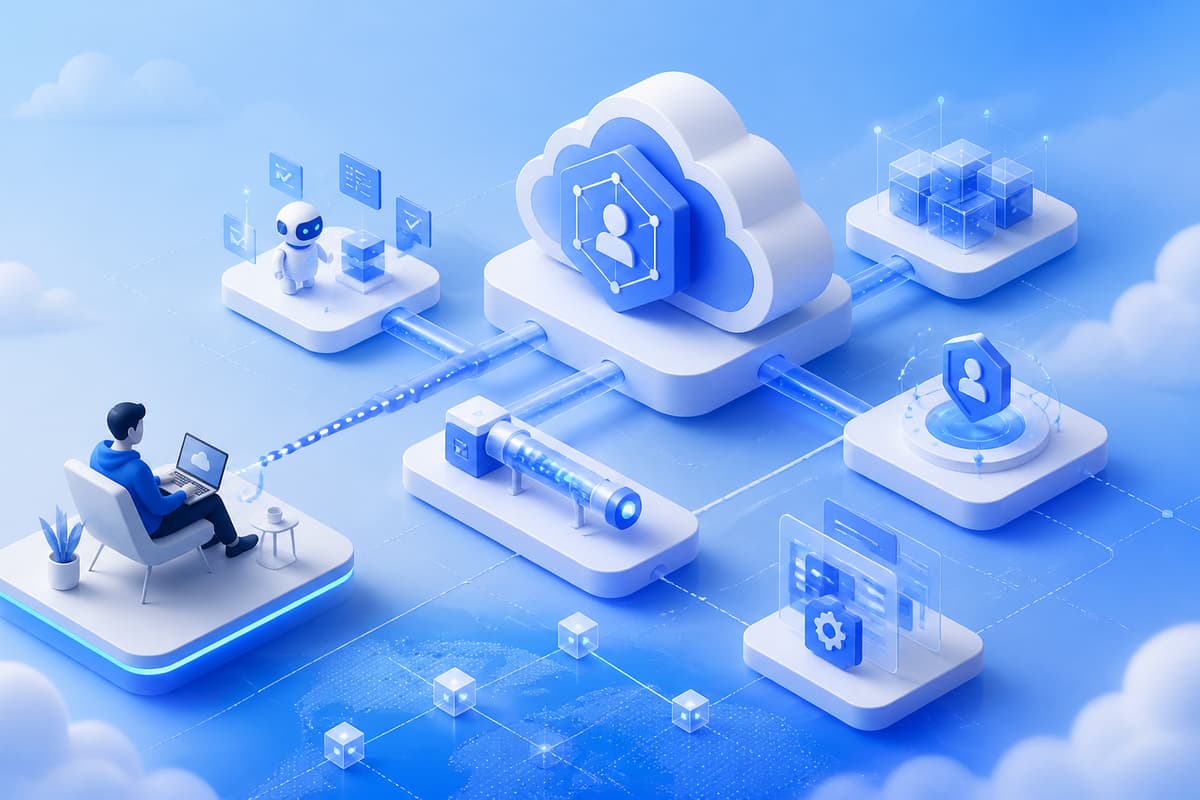
Engineering organizations are starting to treat “where work runs” as a first-class architecture decision. The past 48 hours of writing across InfoQ, AWS, Databricks, and Dropbox shows a consistent direction: execution is shifting from individual machines and long-lived credentials toward centralized, cloud-hosted runners with strong identity boundaries and auditable controls. Reliability incidents in the same news cycle (Microsoft’s Outlook outage) add urgency, because centralization changes blast radius, support models, and the expectations placed on internal platforms.
DoorDash’s Flux is the clearest signal of the shift. InfoQ reports Flux running 130,000 engineering tasks in a month via cloud-based agents rather than developer laptops, turning routine engineering work into a managed service with shared compute, standardized environments, and centralized observability (InfoQ). The pattern rhymes with what data teams have already been doing: AWS Glue 6.0 positions Spark Real-Time Mode as a single place to run batch and sub-second streaming workloads (AWS), and Databricks argues that pre-sizing databases is an outdated habit, advocating autoscaling Lakebase Postgres so capacity follows demand (Databricks). The common thread is a platform stance: standardize execution, then scale it elastically.
Centralization only works when identity becomes the control plane. AWS highlights Redshift integration with IAM Identity Center and enhanced VPC routing, effectively making SSO plus network pathing the default boundary for analytics access (AWS). InfoQ’s deep dive on GCP Workload Identity Federation shows the parallel move on Google Cloud: eliminate long-lived service account keys and rely on federated, short-lived credentials at scale (120+ production projects) (InfoQ). Dropbox’s cookie auditor story lands in the same governance bucket from a different angle: teams are building automated, repeatable compliance checks across “hundreds of web surfaces” instead of relying on manual review (Dropbox). Execution moves to the cloud, and verification follows.
CTOs should read the trend as an organizational design change, not a tooling upgrade. Cloud-hosted agents and managed data runtimes create leverage (reproducibility, faster onboarding, better fleet-level utilization), but they also create internal dependencies and new failure modes. Microsoft testing a fix for an hours-long Outlook outage is a reminder that central services can become productivity single points of failure when teams cannot route around them (TechCrunch). A laptop-first workflow fails locally; a platform-first workflow fails systemically. The platform team’s reliability posture becomes the engineering org’s velocity ceiling.
Practical takeaways for the next quarter:
- Treat “agent execution” like production. Build a paved road for cloud runners (images, secrets, network egress, quotas), then add SLOs and incident response.
- Make identity the default API. Prioritize short-lived credentials (WIF-style federation) and SSO-backed access paths for data systems before scaling automation.
- Align cost and governance early. Autoscaling databases and real-time pipelines reduce overprovisioning, but uncontrolled agent concurrency can recreate the same waste in a new place.
- Add continuous compliance checks. Cookie and privacy auditing patterns generalize to internal controls for data access, model usage, and agent permissions.
The strategic question for CTOs: which parts of engineering should remain endpoint-native, and which should become a managed internal cloud service with explicit reliability and governance guarantees?
Sources
- https://www.infoq.com/news/2026/08/doordash-flux-cloud-agent/
- https://aws.amazon.com/blogs/big-data/build-a-real-time-event-pipeline-with-spark-real-time-mode-on-aws-glue-6-0/
- https://www.databricks.com/blog/autoscaling-lakebase-postgres
- https://aws.amazon.com/blogs/big-data/integrate-amazon-redshift-and-iam-identity-center-with-enhanced-vpc-routing/
- https://www.infoq.com/articles/gcp-wif-scale/
- https://dropbox.tech/security/how-our-inhouse-auditor-tests-cookie-behavior-across-hundreds-of-web-surfaces
- https://techcrunch.com/2026/08/31/microsoft-tests-fix-for-latest-hours-long-outlook-outage/
▶ Interactive tool
Put this into practice — free, no sign-up
Run your own numbers in this interactive tool built for exactly this decision.