Evidence-Based Trust Is Moving Into the Critical Path: Provenance, Traceability, and Measurement Become Core Architecture
Engineering organizations are moving toward evidence-based trust: provenance, traceability, and calibrated measurement are becoming core to security, supply chain resilience, and operational...
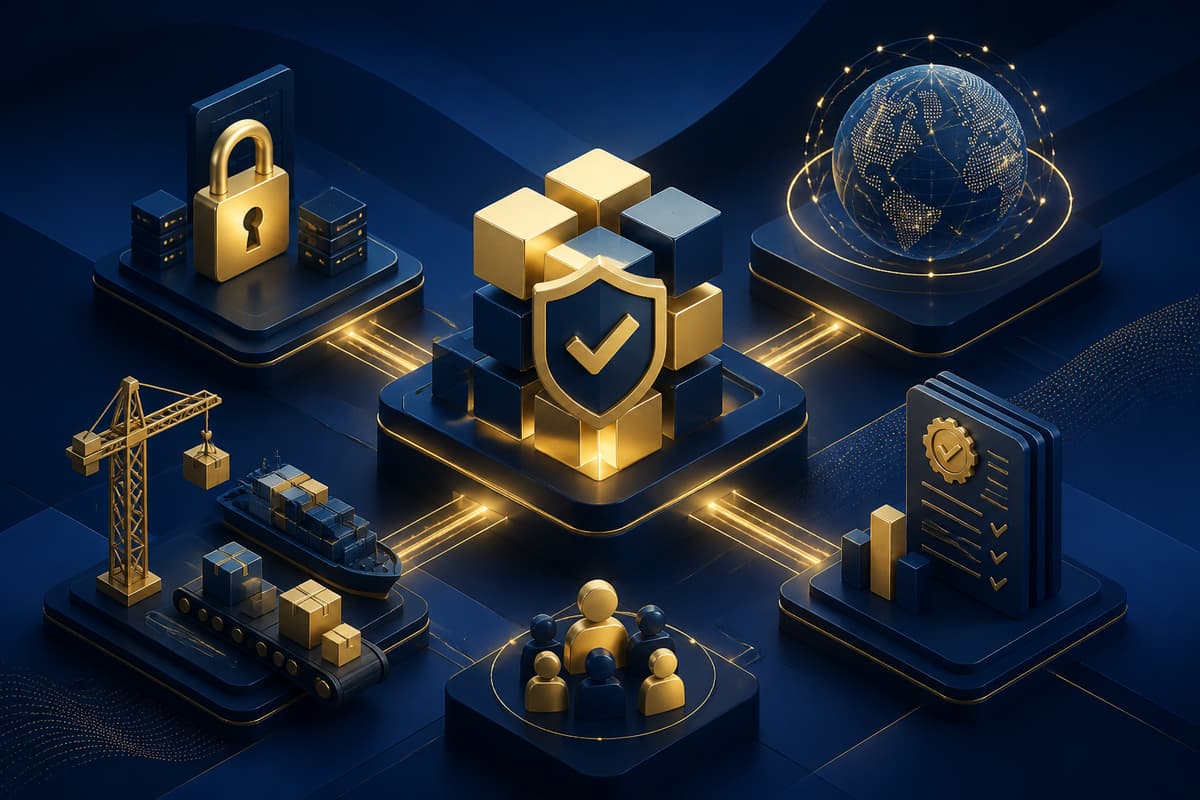
Security programs have spent a decade building controls, policies, and checklists. The next phase looks different. Trust is getting operationalized as evidence: systems need to prove where components came from, what ran where, and whether outputs can be relied on. Supply chain complexity and headline-scale incidents are compressing timelines for that shift.
Signals are coming from standards and from the incident log. NIST is explicitly convening industry around semiconductor traceability and provenance, framing the supply chain as a multi-stage network where confidence requires origin and history ("Second Semiconductor Traceability and Provenance Workshop," NIST) (https://www.nist.gov/news-events/events/2026/12/second-semiconductor-traceability-and-provenance-workshop). NIST is also investing in lower-uncertainty calibration capabilities for broadband antenna gain, a reminder that modern systems depend on trusted measurement, not just trusted code (https://www.nist.gov/news-events/news/2026/10/nist-ctl-announces-new-low-uncertainty-broadband-antenna-gain-calibrations). In parallel, reporting on the record Binance breach underscores how a single compromised endpoint can become a systemic failure when identity and device trust are not strongly bound to verifiable signals (TechCrunch; BBC) (https://techcrunch.com/2026/10/30/north-korean-hackers-blamed-for-stealing-record-6-3b-in-binance-breach/, https://www.bbc.co.uk/news/articles/cm5yn8eqg3npo).
The common thread is not “more compliance.” The common thread is verifiability. Semiconductor provenance work pushes organizations to treat component identity like a first-class data model, joined across design, fabrication, packaging, and deployment. Calibration advances point to a broader expectation that infrastructure claims must be measurable and repeatable, especially where RF, IoT, robotics, and industrial systems intersect with software. Breach narratives show what happens when provenance is implicit, scattered across vendors, laptops, SaaS consoles, and logs that were never designed to act as evidence.
CTOs should expect architecture and operating models to change in three practical ways. First, provenance becomes a product requirement: systems need durable identifiers (for devices, builds, artifacts, and critical actions) and a tamper-evident chain of custody that survives vendor boundaries. Second, “measurement” expands beyond SRE latency charts into calibrated correctness and integrity signals, especially for systems touching physical infrastructure or regulated environments. Third, procurement shifts: vendors that cannot produce auditable evidence (component origin, build integrity, access trails, key handling) become long-term risk, even if feature velocity looks attractive.
Actionable next steps fit into a 90-day plan. Map critical trust chains (hardware, endpoints, CI/CD artifacts, privileged access, and money movement) and identify where trust relies on assertion rather than evidence. Require provenance outputs from suppliers and internal teams (SBOM plus build provenance plus access evidence) and test retrieval during an incident simulation. Invest in tamper-evident logging and identity binding for endpoints and admins, because attackers keep targeting the “one laptop” path. Evidence-based trust is not a side initiative, it is rapidly becoming the shortest path to resilience.
Sources
- https://www.nist.gov/news-events/events/2026/12/second-semiconductor-traceability-and-provenance-workshop
- https://www.nist.gov/news-events/news/2026/10/nist-ctl-announces-new-low-uncertainty-broadband-antenna-gain-calibrations
- https://techcrunch.com/2026/10/30/north-korean-hackers-blamed-for-stealing-record-6-3b-in-binance-breach/
- https://www.bbc.co.uk/news/articles/cm5yn8eqg3npo
▶ Interactive tool
Put this into practice — free, no sign-up
Run your own numbers in these interactive tools built for exactly this decision.