Locality-First Enterprise AI: Sovereign Clouds, Private Connectivity, and the New Security Baseline
Enterprise AI is becoming locality-first: sovereign clouds, private connectivity to on-prem and edge, and stricter security baselines are shaping AI platform choices more than model benchmarks.
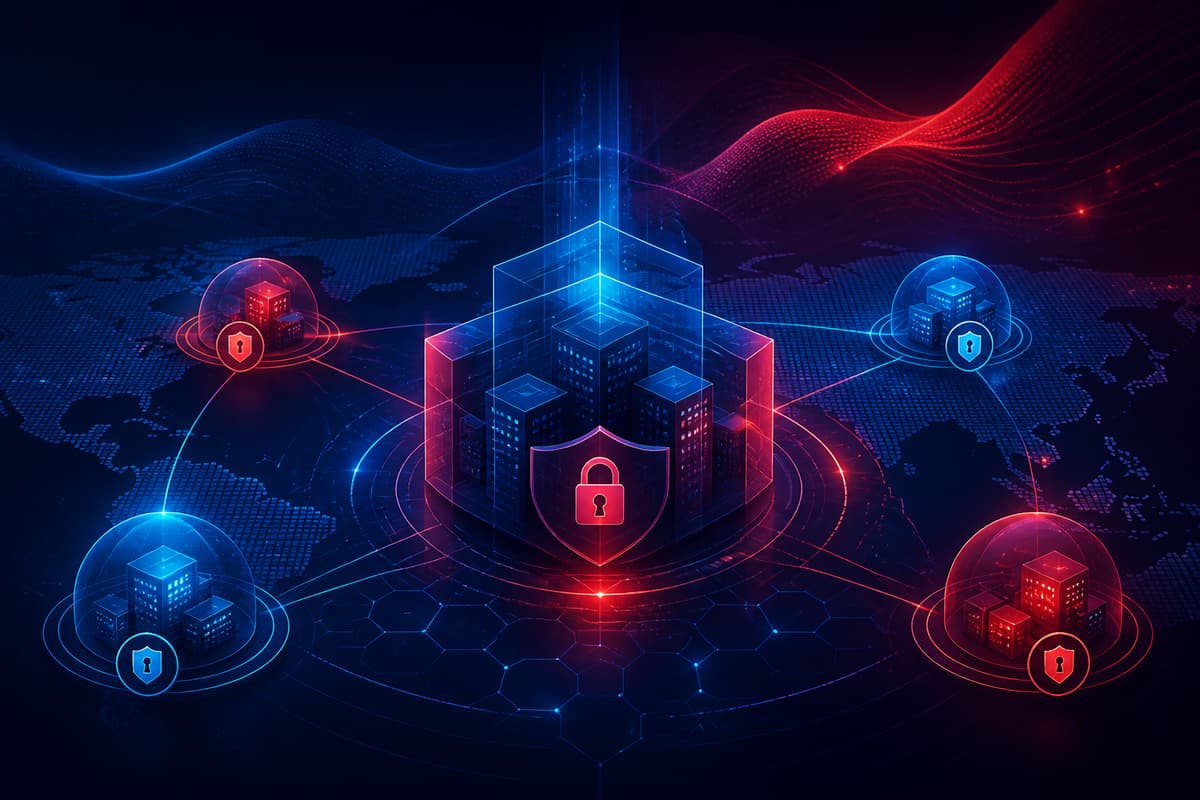
AI roadmaps are colliding with three constraints that used to sit at the edges of architecture discussions: jurisdiction, network locality, and cryptographic durability. The next phase of enterprise AI adoption is getting decided by where data is allowed to live, how it moves, and how long the protections around it remain credible.
Sovereign deployment is moving from niche requirement to mainstream enterprise feature. Snowflake’s announcements with Orange Business and with Bleu position “sovereign data and AI” as a first-class offering for France’s regulated industries, explicitly tying AI capability to trusted national infrastructure and governance expectations (Snowflake, “Sovereign AI for France”; Snowflake, “Sovereign Cloud for France”). The practical implication for CTOs is a platform selection shift: vendor evaluation now includes residency guarantees, operational control boundaries, and audit artifacts as core product requirements, not procurement add-ons.
Network locality is becoming an AI enabler, not a connectivity detail. Snowflake’s alliance with Lumen focuses on private, secure connectivity from on-premises and edge environments into the analytics and AI plane (Snowflake, “Private Connectivity for AI”). That pattern reflects a broader architectural reality: many AI use cases depend on data that cannot be bulk-moved to the public internet, either for latency, cost, or policy reasons. Private paths (direct connect, private fiber, carrier interconnects) are turning into part of the AI platform, especially for inference and near-real-time analytics.
Agentic software is amplifying the stakes. Thoughtworks argues that an “AI-first enterprise” and an “agentic world” reshape SaaS and enterprise strategy, pushing organizations to rethink how systems expose capabilities and how decisions get automated (Thoughtworks, “AI-first enterprise”; Thoughtworks, “future of SaaS in the agentic world”). Agentic workflows increase the volume and sensitivity of machine-to-machine calls, tool invocations, and delegated actions. Data governance and identity controls must operate at that velocity, across boundaries that include sovereign regions and private networks.
Security guidance is tightening at the same time. The UK NCSC’s updated TLS guidance for post-quantum readiness signals that “later” is no longer a safe migration plan for cryptography on long-lived systems and sensitive data flows (NCSC, “post-quantum updates to our TLS guidance”; NCSC, “Using TLS to protect data”). Meanwhile, the Next.js out-of-band security update is a reminder that upstream vulnerabilities can force rapid change in widely deployed components, including the web surfaces that increasingly front AI features (Next.js security update). Locality-first AI architectures increase the number of integration points, which increases the blast radius of weak crypto defaults and supply-chain gaps.
Action for CTOs:
- Treat locality as an architecture primitive. Add “where does data transit and terminate” to every AI design review, alongside cost and latency.
- Upgrade platform evaluation criteria. Require residency controls, sovereign operating models, and audit-ready evidence, not marketing claims.
- Make private connectivity part of the AI platform plan. Budget and staff for network design (direct connections, segmentation, egress controls) as an AI dependency.
- Pull forward crypto modernization. Map TLS endpoints involved in AI (APIs, agents, internal tools), then align to NCSC-style profiles and a post-quantum migration path.
- Reduce integration blast radius. Assume frequent upstream fixes (frameworks, SDKs, observability agents) and invest in rapid patching, canaries, and dependency governance.
The winners in the next 12 months will not be the teams with the most model experiments. The winners will be the teams that can ship AI features while proving, in detail, where the data went and why the security posture will hold up over time.
Sources
- https://www.snowflake.com/en/blog/snowflake-orange-business-sovereign-ai-france/
- https://www.snowflake.com/en/blog/snowflake-bleu-sovereign-cloud-france/
- https://www.snowflake.com/en/blog/snowflake-lumen-private-connectivity-ai/
- https://www.thoughtworks.com/insights/blog/technology-strategy/the-shift-to-the-ai-first-enterprise-technology-forum-2026-insights
- https://www.thoughtworks.com/insights/blog/technology-strategy/the-future-of-saas-in-the-agentic-world--beyond-the-disruption-n
- https://www.ncsc.gov.uk/blogs/post-quantum-updates-to-our-tls-guidance
- https://www.ncsc.gov.uk/guidance/using-tls-to-protect-data
- https://nextjs.org/blog/nextjs-security-update-october-14-2026
▶ Interactive tool
Put this into practice — free, no sign-up
Run your own numbers in this interactive tool built for exactly this decision.