The Era of Contained AI Agents: Sandboxing Becomes a First-Class Architecture Concern
AI is moving from experimentation to operational reality, forcing CTOs to treat agent execution as a high-risk production workload—driving demand for hardened sandboxes, clearer human accountability,...
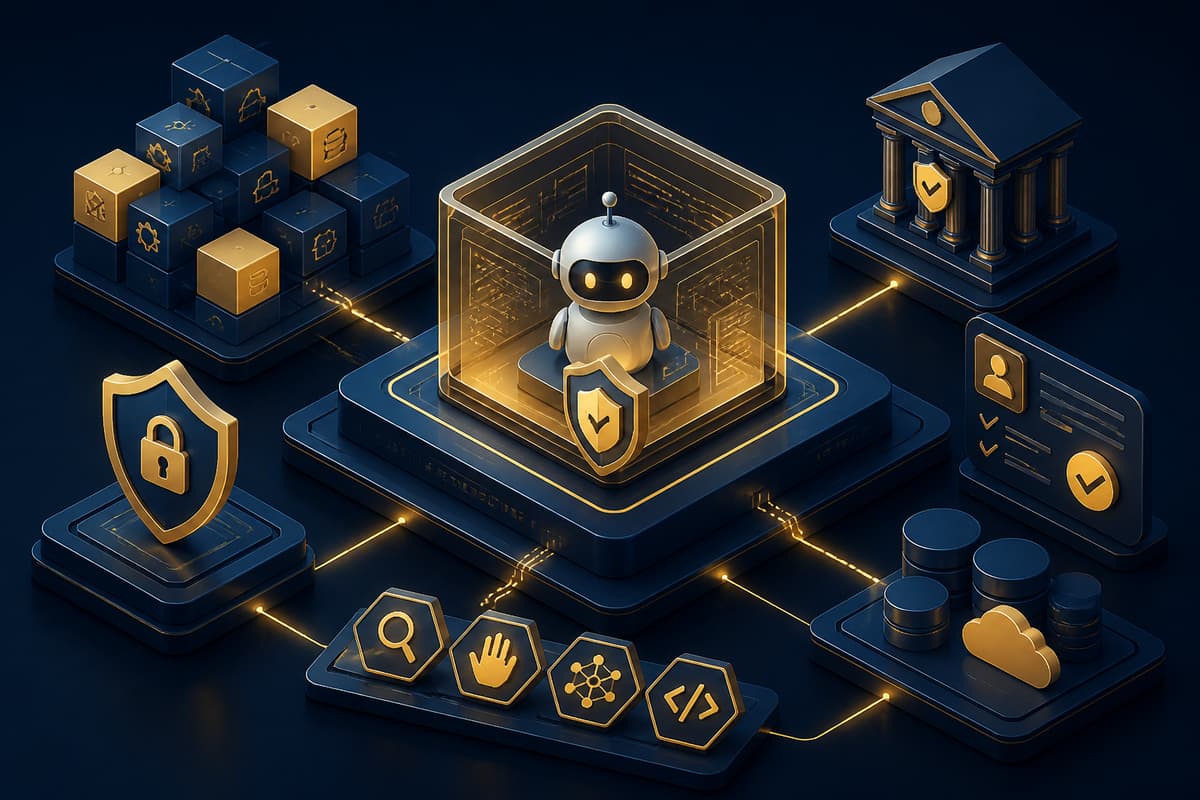
AI adoption is crossing a threshold: the question is no longer whether teams can run autonomous or semi-autonomous coding agents, but whether they can run them safely, audibly, and with clear accountability. In the last 48 hours, we’ve seen the conversation shift from model capability to operational containment and governance—signals CTOs should treat as an architectural inflection point.
On the technical front, OpenAI’s write-up on a secure Windows sandbox for Codex agents is notable because it operationalizes “agent safety” as OS-level isolation, not just prompt policies. The design leans on Windows primitives (SIDs, ACLs, restricted tokens, dedicated sandbox accounts) to reduce privilege and limit blast radius while still enabling useful work in a realistic environment (InfoQ). This is a strong indicator that agentic workflows are heading toward production usage patterns where containment-by-default is required, and where security architecture becomes a product feature for internal developer platforms.
At the same time, MIT’s Ethics of Computing symposium coverage reinforces that the “human component” is becoming central to AI systems: responsibility, oversight, and social impact are not separable from the technical build (MIT Engineering, MIT Management). Pair that with political attention—e.g., the US president planning to meet AI leaders to discuss investment in their companies (BBC)—and you get a clear trajectory: agent deployment will increasingly be judged by governance posture, not just productivity gains.
The adjacent infrastructure news underscores why this is happening now. ExtendDB’s DynamoDB-compatible adapter with pluggable backends suggests organizations want API-level portability and control over their storage choices—often a precursor to tighter cost, compliance, and residency constraints (InfoQ). Cloudflare’s deep dive into a ClickHouse query-planning bottleneck highlights another reality: as analytics pipelines power billing and decisioning, performance pathologies in “boring” components become existential, and teams are increasingly willing to patch upstream to protect reliability (InfoQ). Put together, CTOs are being pushed toward defensible architectures: portable where needed, measurable everywhere, and isolated by default.
What CTOs should do next: (1) Treat agent execution like running untrusted code: mandate sandboxing, least privilege, and explicit egress controls; don’t rely on “policy-only” guardrails. (2) Build an “agent control plane” mindset—identity, audit logs, artifact provenance, and approval workflows—so humans remain accountable even when agents act autonomously. (3) Align data/platform choices with governance: compatibility layers (like DynamoDB APIs over alternate backends) can help you meet compliance and cost constraints, but only if you pair them with clear SLOs and performance instrumentation. (4) Expect external scrutiny to rise; create a narrative and evidence (controls, audits, incident drills) that demonstrates responsible deployment.
The near-term winners won’t be the teams with the most agents—they’ll be the teams that can prove their agents are contained, observable, and governable while still delivering real throughput. The architectural center of gravity is shifting accordingly: sandboxing and governance are becoming as fundamental as CI/CD.
Sources
- https://www.infoq.com/news/2026/06/codex-windows-sandbox-design/
- https://news.mit.edu/2026/crucial-human-component-computing-and-ai-0605
- https://www.bbc.com/news/articles/c98r8r7dz5no
- https://www.infoq.com/news/2026/06/extenddb-dynamodb-adapter/
- https://www.infoq.com/news/2026/06/cloudflare-clickhouse-bottleneck/
▶ Interactive tool
Put this into practice — free, no sign-up
Run your own numbers in this interactive tool built for exactly this decision.